
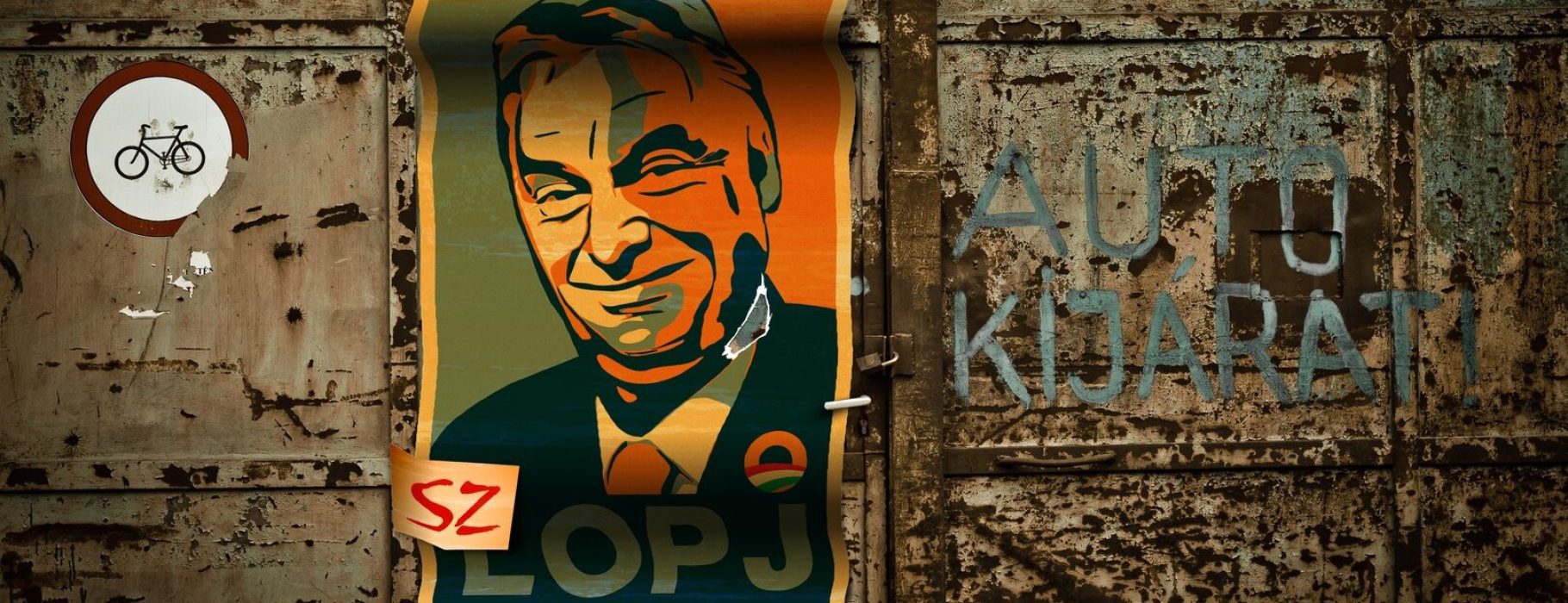
On April 12, Orbán’s sixteen-year-long rule came to an end in Hungary. To the left, the significance of Péter Magyar’s and Tisza’s electoral victory lies less in ideology than in political method, with many seeing the result as a blow to the global far-right, as well as an attempt to restore liberal democracy in Hungary. What this election exposed is how deeply paralyzed and ineffective Hungary’s established left‑liberal opposition had become over the past decades. International commentators may prefer clichéd explanations that frame the result as a generational divide, a victory for liberalism, or a civilizational clash between East and West, yet such narratives obscure the real dynamic at work: Magyar succeeded because he is the product of the same Fidesz party elite.1 For characteristic misreadings see, for instance: Laslo Gendler, “If Orbán Loses Hungary’s Election, It Will Dispel the Air of Invincibility Around Strongmen,” UnPopulist (Substack), April 7, 2026, https://www.theunpopulist.net/p/if-orban-loses-hungarys-election; Isaac Stanley-Becker, “Hungary Just Ousted the Unoustable,” Atlantic, April 12, 2026, https://www.theatlantic.com/politics/2026/04/hungary-viktor-orban-magyar-election-autocrat/686777/; Anne Applebaum, “Illiberalism Is Not Inevitable,” Atlantic, April 12, 2026, https://www.theatlantic.com/ideas/2026/04/illiberalism-not-inevitable/686778/. He merely turned against the system to pursue his own leadership ambitions.
For years, Hungary’s opposition reconciled itself to structural defeat. Faced with an electoral and constitutional system engineered by Fidesz, near‑total media capture, and pervasive clientelism, many critics concluded that democratic change was no longer possible through electoral means. This fatalism shaped the opposition’s strategy. This strategy relied on ignoring key demographics, especially in rural areas, which they believed they couldn’t win over. Consequently, they failed to put sufficient effort in mobilization and network building. Magyar’s intervention disrupted this equilibrium not because he articulated a progressive or liberal program, but because he rejected the ancient opposition’s paradigm of learned helplessness.
Many international commentators have also argued that if Orbán was removed electorally, his rule was less authoritarian than imagined, which is also a simplistic explanation that downplays his grip on key institutions and the media. The pull of fatalism reflected at least this reality—Orbán was indeed in control, that is, until he wasn’t. For the left confronting entrenched authoritarianism elsewhere, the lesson is an uncomfortable one: identify and fill the void left by legacy parties that tarnished their image by aiding and abetting genocide, war, abuse, and other moral failings that leave voters disappointed and seeking new alternatives. In the void left by the opposition, Magyar identified and amplified the Fidesz party’s moral failings, such as child abuse and corruption scandals, and promised to both restore national dignity and seek accountability over the government’s shortcomings. This shows that dignity politics still matters.
However, a future left-wing strategy needs to prioritize rebuilding counterhegemonic institutional infrastructure otherwise the risk of another authoritarian takeover remains possible. A resurgent left is necessary because victory over Orbán does not at all resolve the many lingering problems for Hungarians. Unless the economic and material insecurity and widespread inequality that fueled Orbánism for years is addressed, there is a risk that other far-right figures would rise, similarly to the Alternative für Deutschland (AfD) party in Germany. Frustrations in Hungary surged over corruption as struggling working-class people watched Orbán and his cronies enrich themselves, without investing in public goods, such as healthcare, housing, and public transit. The systematic exclusion of minorities—particularly Romani people, immigrants, and LGBTQ+ people—also remains a decisive and unresolved issue.
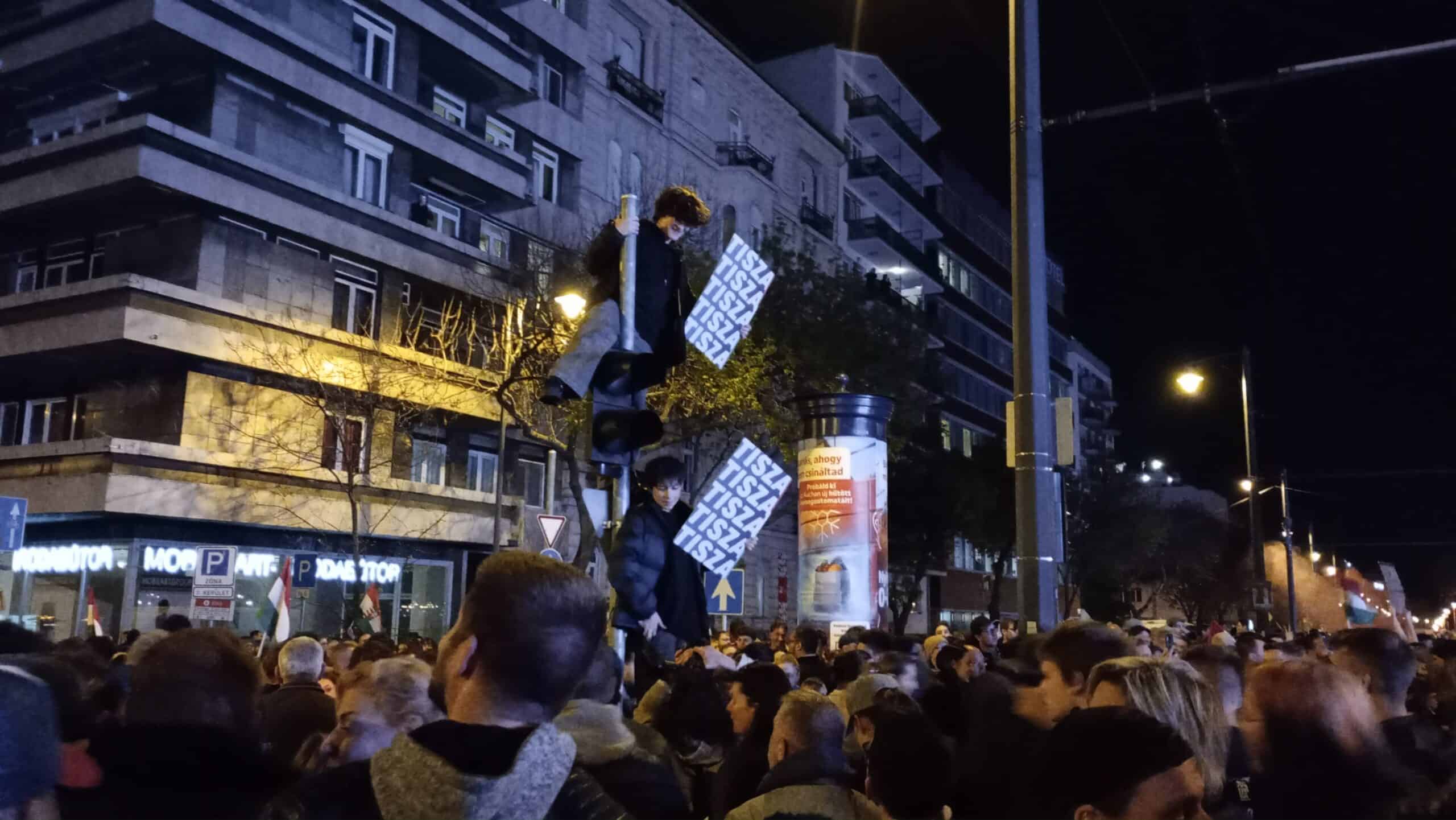
April 12, 2026
Photo Credit: Vaula Rex via Wikimedia Commons
This is clear, in particular, given Magyar’s silence on key issues such as minority rights. One of Orbán’s most damaging legacies—one that was the subject of international outrage—is the suppression of LGBTQ+ rights and heavy censorship, particularly targeting transgender people. Magyar’s animosity towards LGBTQ+ issues has been a subject of criticism internally. However, Tisza party loyalists argued that the task of defeating Orbán had to be prioritized over any and all concerns with Magyar’s actual policies. Even though, the treatment of transgender people and immigrants is the gateway to rising global fascism and demands urgent response, the incoming Hungarian government dismisses these issues mere identity politics that do not affect the majority of Hungarians. However, the political implications of these issues are far greater. The symbolic terrain Orbán cultivated for sixteen years won’t disappear with a single election result; unless dignity is restored to all, including LGBTQ+ people and immigrants, there is a risk of ceding ground back to the far right.
The fallout produced an unlikely protagonist: Péter Magyar, Varga’s former husband, who resigned from state positions and accused the government of complicity and corruption. With an interview by a left-wing video platform called Partizán, Magyar catapulted himself into public prominence. His record-breaking viral interview and subsequent leadership of mass protests signaled that elite dissent had punctured the regime’s aura of inevitability.
Magyar’s trajectory is almost theatrically ironic: a nepo-baby product of conservative legal aristocracy and a quintessential Fidesz insider turned insurgent. His pivot from loyal functionary to populist mobilizer, equal parts romantic nationalist and digital-age agitator reminiscent of the manosphere, proved unexpectedly effective. His anticorruption rhetoric resonated precisely because it came from within the system’s own ranks.
Harnessing this momentum, Magyar revived the dormant Tisza party, which swiftly captured 30 percent in the 2024 European elections. His strategy was disarmingly simple and devastatingly novel: relentless rural campaigning, bypassing Fidesz-controlled media through direct contact, folkloric symbolism, and an aggressive social media presence. The lesson for the left in a post-Orbán Hungary should be recognizing the necessity of building up robust rural political and party networks. For Magyar, however, his aesthetic oscillated between nineteenth-century nationalist revivalism and twenty-first-century influencer politics (1848 national hero Petőfi meets TikTok). It was developed with surprising coherence. Magyar capitalized on both elite fracture and popular discontent. He reassembled a winning bloc that spanned disillusioned conservatives, urban voters, and segments of the rural electorate once loyal to Fidesz.
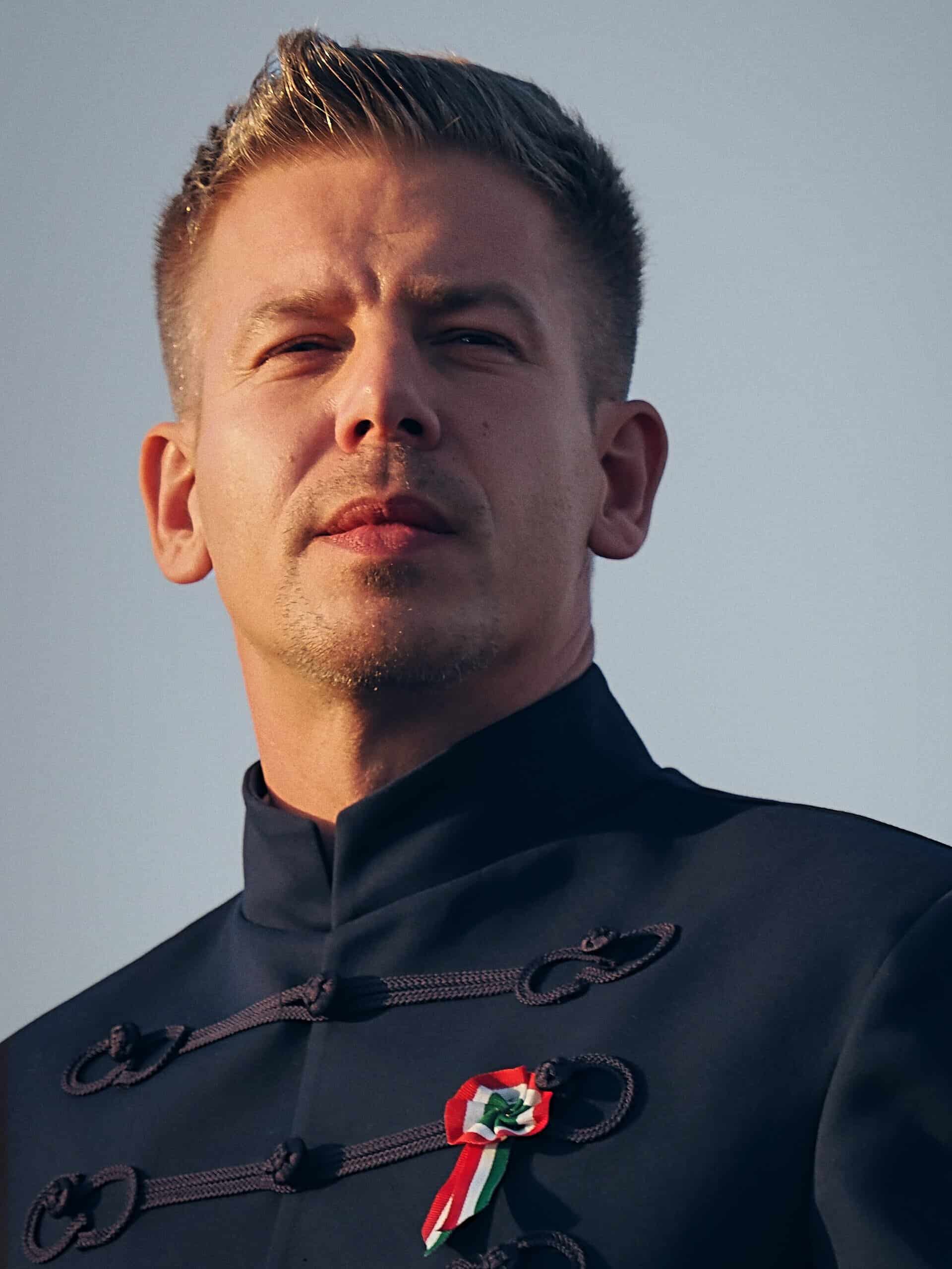
March 15, 2026.
Photo Credit: Norbert Banhalmi via Wikimedia Commons.
Meanwhile, the ancient opposition faced an existential dilemma: unite behind a legacy conservative with uncomfortable views, or preserve ideological purity and risk keeping Orbán in power. Many chose pragmatism, thus the logic of “lesser evil” prevailed. Orbán’s carefully cultivated mystique of invincibility began to erode, replaced by something far more dangerous: vulnerability.
With record voter turnout, Tisza secured an overwhelming parliamentary majority. Magyar’s victory speech, equal parts moral reckoning and political theater, promised accountability in a system long defined by its absence. Yet the institutional terrain remains treacherous: a captured judiciary and an entrenched presidency ensure that dismantling the old order will be a real challenge, even if it were desired. The central dilemma of the “lesser evil” strategy lies in the suspension of programmatic clarity in favor of short-term political expediency. Liberals and left actors rallied behind Magyar, not out of ideological convergence, but as a strategic wager on democratic restoration as a precondition for survival and future contestation.
Yet this wager entails significant risks. The absence of explicitly left-wing parliamentary representation, combined with the continued strength of Fidesz and the presence of the even more hardline Mi Hazánk, suggests that the political field may be reconstituted without meaningful institutional anchoring for redistributive or class-based agendas. In such a configuration, the left risks reproducing its earlier pattern of subordination within broad antiauthoritarian coalitions, in which its role is reduced to moral legitimation rather than substantive agenda setting.
At the same time, this conjuncture should not be read solely in terms of closure. Precisely because the opposition space has been reorganized around anticorruption and institutional repair, rather than socioeconomic transformation, it generates an opening for the rearticulation of left politics outside the constraints that shaped the pre-2010 landscape. The near-total absence of credible left representation creates the structural conditions for the emergence of new political actors capable of linking democratic demands to material grievances around inequality, labor precarity, and dependent development. Recent figures elsewhere such as Zack Polanski or Zohran Mamdani demonstrate that it is possible to combine charismatic leadership with a programmatic recentering of class and redistributive politics within a broader democratic idiom. Whether such a trajectory can be replicated in Hungary depends, however, on rebuilding not only electoral presence but also the organizational and social infrastructures, unions, local networks, intellectual spaces, necessary for sustained mobilization.
Hungary’s current transition should, therefore, be understood as a liminal moment rather than a definitive rupture. It opens a window for democratic reconstruction, but offers no guarantee that such reconstruction will take a substantively different socioeconomic form. Possibility remains far short of actuality, and insofar as the left remains confined to a reactive alignment with liberal restoration, it risks entrenching the very conditions that previously enabled the consolidation of Orbánism. The strategic task for the left, then, is not simply to participate in regime change, but to convert this moment of fluidity into a project of independent political recomposition, one capable of challenging both authoritarian governance and its underlying neoliberal economic foundations.
More than anything, Péter Magyar’s ascent signals not a radical democratic renewal but a shift in governing style. His incoming administration is characterized as markedly technocratic: an attempt to replace personalized, clientelist rule with more rationalized, managerial governance. However, conflating technocracy with democratization is a mistake the left cannot afford to make. The removal of overt authoritarianism does not automatically generate participatory politics.3For example the European Commission President explicitly called the election a “victory for fundamental freedoms”, even comparing it to 1956 and 1989 democratic turning points. Indeed, it may merely substitute one form of elite rule for another— sleeker and more competent, but no less distant from popular agency. The political field has effectively been reconfigured into a contest between a conservative technocratic center and a diminished but still potent right.
Orbánism has been defeated, but the conditions that sustained it—economic dependency on foreign capital, weak institutions, and elite-driven politics—have not simply vanished. If anything, they risk being rearticulated in a new, technocratic idiom. The post-Orbán era, then, may prove less a democratic rebirth than a delicate experiment in political reinvention. Magyar must navigate between competing imperatives: reassuring investors, rebuilding state capacity, and responding to the social demands that propelled him to power. In doing so, he confronts a paradox familiar to postauthoritarian transitions: dismantling a system is easier than replacing the conditions that made it viable. Beyond Magyar, the Hungarian transition underscores a broader lesson for the left: while authoritarian regimes can be electorally displaced, the socioeconomic conditions that sustain them—dependency on capital, inequality, and weakened social infrastructures—pose far more durable constraints, making democratic restoration without material transformation inherently unstable.
Ideological Engineering
As demonstrated above, the notion that Magyar’s victory is a huge blow to the global far-right may seem like an exaggeration as Magyar himself represents the conservative mainstream. But Orbán’s fall does mean that reactionary movements can no longer grow in Budapest. Orbán’s success was marked by his advanced power patronage and his ability to foster ideological networks beyond borders. Significant public resources were directed toward right-wing intellectual elite‑forming institutions such as the Mathias Corvinus Collegium, CPAC, the Alapjogokért Központ, and the Danube Institute, which also operated as a node within transnational far‑right intellectual networks. An obscene amount of public resources were channeled into think tanks, fellowships for international academics and commentators, high‑profile lecture engagements, and well‑resourced conferences showcasing foreign supporters and advocates of the Orbánist political model. These events attracted figures from conservative and right‑wing circles in Europe and the Americas, contributing to Budapest’s emergence as a hub for ideologues aligned with conservative and nationalist currents. These ideologues frequently praised the city’s traditional cultural profile and their perceived intellectual accessibility of Hungary’s political leadership.
Budapest’s transformation into this ideological laboratory was not incidental, but the result of a deliberate state strategy and top-down ideological engineering. These policies are no longer on the table with Fidesz out of power, but they were ambitious and effective for Orbán. Various state-sponsored conferences, fellowships, and high‑profile events—such as CPAC‑affiliated gatherings—were used to embed Hungary within transnational nationalist networks, thereby enhancing its symbolic status as a safe haven for the global reactionary movement. Peter Thiel, Javier Milei, Benjamin Netanyahu, Tucker Carlson, Ben Shapiro, Curtis Yarvin, Alice Weidel, JD Vance, and Santiago Abascal made appearances in Budapest, just to name a few. Many came to endorse Orbán’s project, and some even stayed for the grift— cashing fat checks bankrolled by Hungarian taxpayers.
Notorious conservative commentator, Rod Dreher’s pilgrimage to Hungary is a prime example of this ideological migration: disillusioned American conservatives came to see Viktor Orbán’s Hungary not merely as a country, but as a civilizational refuge and political thought experiment in real time.4Benjamin Wallace Wells, “What Conservatives See in Hungary’s Leader,” New Yorker, September 13, 2021, https://www.newyorker.com/news/annals-of-inquiry/what-rod-dreher-sees-in-viktor-orban. What Dreher saw in Orbán, then, is not simply a politician but a model of governance that rejects the liberal order. Orbán’s Hungary appeared, in his reading, as a polity willing to embrace Christian traditionalism, reject cultural change, and resist migration in the name of social cohesion. In this political imagination, Hungary functioned as both mirror and escape: a place onto which anxieties about the West can be projected and, temporarily, resolved. Dreher is not an outlier, but part of a transnational intellectual current that looks to places like Hungary as laboratories for postliberal governance.
This misrepresentation of Orbán’s Hungary by foreign intellectuals had analytical and political consequences. It contributed to a narrative in which Orbánism appears as an external rupture from liberal capitalism rather than as one of its internally generated forms under conditions of crisis. In doing so, it reinforces a dichotomy between “liberal Europe” and “illiberal Hungary” that overlooks their shared material foundation in dependent development and unequal integration into global markets. This framing also risks legitimizing a purely restorative political project—centered on returning to liberal norms—without addressing the socioeconomic conditions that enabled Orbán’s rise in the first place. In this sense, the misrepresentation of Orbán’s Hungary is not merely an epistemic failure, but part of a broader tendency to depoliticize the relationship between authoritarian governance and capitalist restructuring, thereby limiting the horizon of viable critique and opposition. Orbán’s appeal lied not only in his policies but in what he demonstrated: he showed that it is possible to win elections, reshape institutions, and articulate a coherent ideological project outside Western liberal orthodoxy. The new right was waging its culture war against “woke” from within the Hungarian capital.
The mechanism is striking in its simplicity: foreign commentators and public intellectuals receive contracts or fellowships, often stipulating the production of articles for Western outlets that portray Hungary’s policies on family, geopolitics, or culture as exemplary models. Compensation can be substantial, with some figures reportedly earning thousands of dollars monthly in exchange for a steady stream of commentary aligned with government preferences.5For one account tracking the money see Szántó-Nagy Bálint. Szántó-Nagy Bálint, “How Public Funds Are Used to Pay for English-Language Articles Portraying Orbán as a Brillieant Leader,” Telex, January 20, 2026, https://telex.hu/english/2026/01/20/how-public-funds-pay-for-english-language-articles-portraying-orban-as-a-brilliant-leader. The implication is not necessarily overt propaganda, but rather a more subtle form of narrative shaping: soft power exercised through seemingly independent voices.
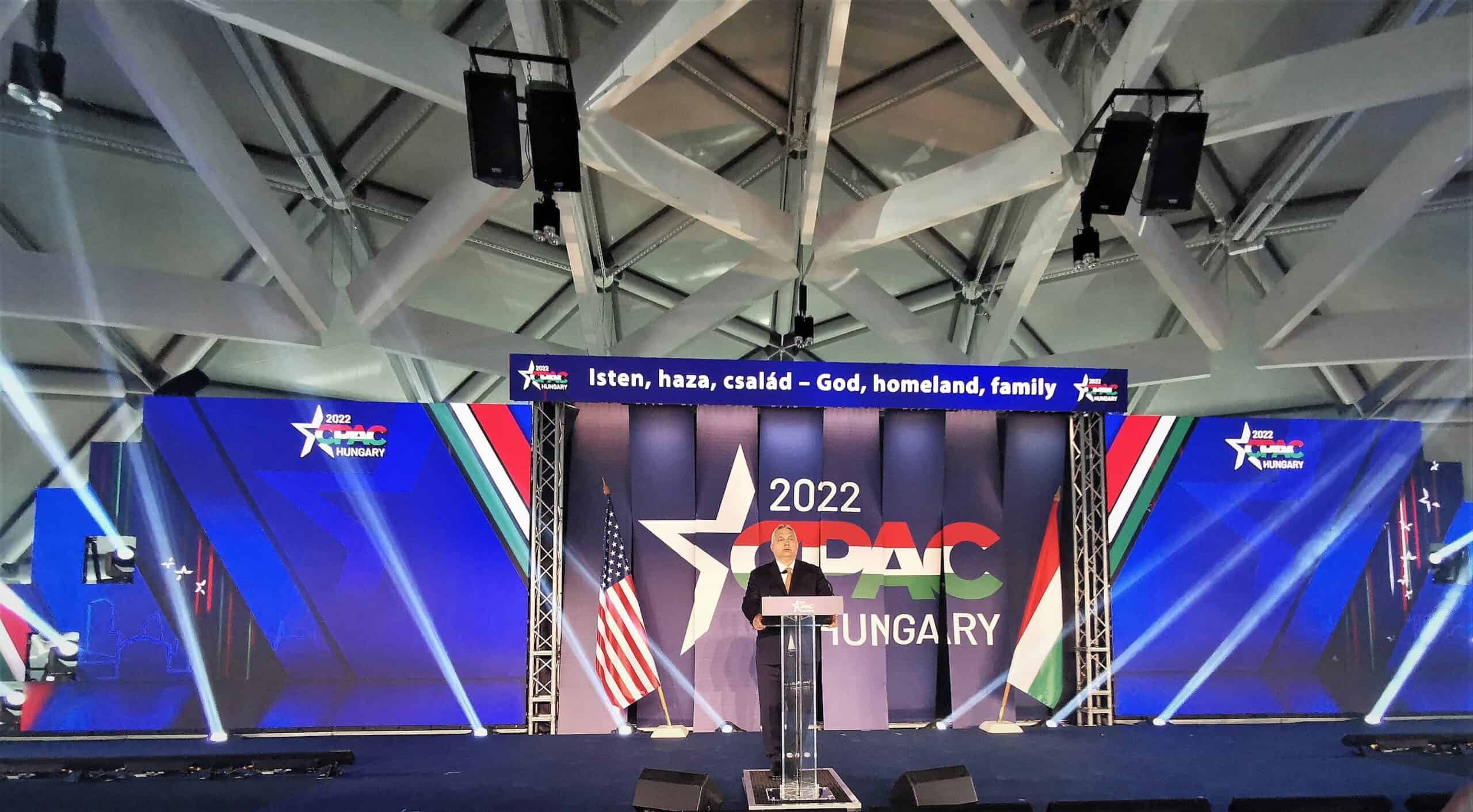
Photo Credit: Elekes Andor via Wikimedia Commons.
This strategy reveals a notable paradox. While the Hungarian government has domestically advanced a rhetoric of “sovereignty protection” and suspicion toward foreign influence, it simultaneously invests in influencing foreign publics using Hungarian taxpayer money. Notably, it forced the Central European University out of Hungary to counter “Soros-backed” foreign influence. What is framed at home as defense against external interference thus appeared abroad as an assertive export of political ideas. The export of Orbánism, in this reading, is not driven by spontaneous admiration alone, but by a carefully resourced infrastructure designed to translate national politics into a transnational ideological project. Orbán’s strategy of top-down ideological engineering thus demonstrated that influence need not travel through coercion or formal alliances: it can be commissioned, contracted, and published, one op-ed at a time.
Alongside reactionary ideological engineering, the Orbán regime pursued the systematic dismantling or neutralization of autonomous intellectual and left-wing counterstructures that could sustain alternative political imaginaries. This has involved not only the restructuring of academia and the cultural sector, but also symbolic interventions, such as the effective closure and removal of the Lukács Archive in 2018. Such measures extend beyond censorship, targeting the material and institutional bases through which critical traditions are reproduced. By eroding these sites of critical thinking, debate, and organization, the Fidesz administration weakened the infrastructure necessary for oppositional politics, contributing to a landscape in which ideological contestation is structurally constrained.
Geopolitical Gambit
The third and possibly most important factor in Orbán’s downfall was his increasingly desperate geopolitical megalomania. While Magyar focused on popular domestic issues, like the cost of living and accountability over the misuse of public resources, Orbán was caught up in a game of thrones situation and fixated on foreign policy. Domestic issues were a priority to the majority of voters, but Orbán was too invested in global affairs and inflating his own role in power brokerage. Hungary is a small and relatively irrelevant Eastern European country, however, Orbán attempted to define its standing in the era of global hegemonic realignment. Orbán, disillusioned by Western liberal order, promoted his foreign policy as an ”opening towards the East” as he sought to build stronger partnerships with Moscow and Beijing despite growing hostilities in Brussels. Diversifying access to markets through potent diplomacy was one of his most important tasks.
Even though Orbán framed this turn towards Moscow as purely economic dependencies, there were also clear ideological alignments with Putin’s regime: nationalism, patriarchal family values, hostility to LGBTQ+ people who were framed as beholden to foreign decadence, masculinist aesthetics, explicit antiliberalism, and Christianity as a marker of national identity. Besides shared values, following the illegitimate invasion of Ukraine, Orbán also understood how to use his accordance with Putin as a disruptive force within the European Union to pursue his own agenda. At the geopolitical level, Orbán emerged as a dissonant actor within the European Union’s nominal unity. While formally embedded in Western institutions, he repeatedly cultivated bilateral ties with Moscow by meeting Putin, advocating negotiations on Russian terms, and offering Hungary as a potential diplomatic bridge. This posture allowed him to cast himself as a mediator within a bloc otherwise defined by its collective response to Russia’s war in Ukraine.
Orbán’s Russia policy served to amplify Hungary’s bargaining position within the European Union: by threatening vetoes on sanctions, aid packages, or common foreign policy positions, he converted geopolitical friction into political capital. Proximity to Putin functioned not merely as alignment, but as a negotiating instrument and way of extracting concessions from Brussels while reinforcing a narrative of national autonomy. However, operating as a firewall for Putin had its price: Hungary lost Poland as its key ally in Europe, which emerged as the strongest pro-Ukraine advocate in the region. Magyar announced that his first diplomatic visit as prime minister would be to Warsaw precisely to repair its deteriorating relationship with Budapest. This also could signal a shift in Magyar’s foreign policy in that he could choose to prioritize regional partners over global ones.
Orbán’s engagement with Putin also operated as a symbolic gesture within broader culture wars: it signaled resistance to liberal internationalism and positioned Hungary as a champion of sovereignty against perceived Western overreach. This stance resonated beyond Europe, aligning Orbán with a transnational network of right-wing actors who view Putin not simply as a geopolitical figure, but as an emblem of postliberal order and potential multipolarity. Futhermore, Hungary has not only acted as a disruptive political force within the European Union, but Orbán’s entire reelection campaign was shaped by anti-Ukraine messages, presenting himself as the “pro-peace” candidate. Once notorious for promoting nation-wide antisemitic posters vilifying George Soros, Orbán turned Zelenskyy into the latest boogeyman conspiring to bring misfortune upon the Hungarian nation. However, the hatemongering propaganda fell flat this time around, as it was harder to portray “blonde-haired and blue-eyed” Ukrainians as the enemies, instead of the “globalists” and “migrants.”
As Orbán’s propaganda promoting himself as a force of peace grew more ambitious, his stance was quickly discredited by his inhumane and hypocritical reaction to Israel’s genocide in occupied Palestine, as well as its war on Lebanon and Iran. Similarly to Putin, Benjamin Netanyahu also found a key ally in Orbán within the European Union. Hungary repeatedly voted against ceasefire resolutions, rejected sanction proposals, and also joined South Africa’s genocide case on Israel’s side (the only country in Europe to do so, as Germany pulled out). Hungary’s alliance with Israel only grew stronger during the genocide, and in 2025 Orbán invited Netanyahu to Budapest, as he announced that Hungary would leave the International Criminal Court and not arrest fugitive Israeli officials—creating a safe haven for both Israeli and Russian war criminals in Europe. Orbán’s and Netanyahu’s allyship seemed mutually beneficial: Hungary acted as a firewall for Israel in the European Union, and Israeli officials helped whitewash the Fidesz party’s past legacy of antisemitism.
There is also a strong ideological alignment between Orbán and Netanyahu. Israel’s prime minister delivered a video message to the CPAC Hungary conference just weeks before the Hungarian elections. In this message, Netanyahu effectively endorsed Orbán, describing him as a resolute and dependable leader, “like a rock,” capable of ensuring national security and stability in turbulent times. The language of the endorsement was strikingly civilizational in tone. Netanyahu situated Orbán within a broader struggle to defend “Western civilization” against perceived external threats. In doing so Netanyahu reframed Orbán’s domestic political project as part of a global ideological front—one that transcends national boundaries and aligns disparate conservative actors around shared narratives of security, sovereignty, and cultural defense. Endorsements from figures like Netanyahu thus served a dual function: they bolstered Orbán’s stature domestically while simultaneously reinforcing his role as an emblem of a wider postliberal political current.
Orbán’s alliance with Netanyahu, however, wasn’t singled out in Hungary for criticism, rather it was praised— even by the moderate opposition, which rapidly exposed their selective morality and double standards in Ukraine. As every local and global commentator covered Orbán’s alliance with Putin, they overlooked his even stronger alliance with Netanyahu. This cannot be explained by anything else but learned racism the widespread normalization civilizational discourse—framing the explicitly fascist Israel as a bastion of “Western civilization.”
Orbán and Magyar articulate moderately contrasting foreign policy orientations; Magyar in no way articulates a complete rupture. Orbán’s strategy has been characterized by “Eastern Opening” pragmatism and sovereigntist balancing, positioning Hungary as a semiautonomous actor within the European Union while cultivating ties with Russia and China, often obstructing EU consensus on sanctions, Ukraine, and rule-of-law conditionality. This approach framed Hungary as a dissenting node within Euro-Atlantic structures, leveraging geopolitical ambiguity to extract concessions while aligning rhetorically with illiberal and multipolar currents.
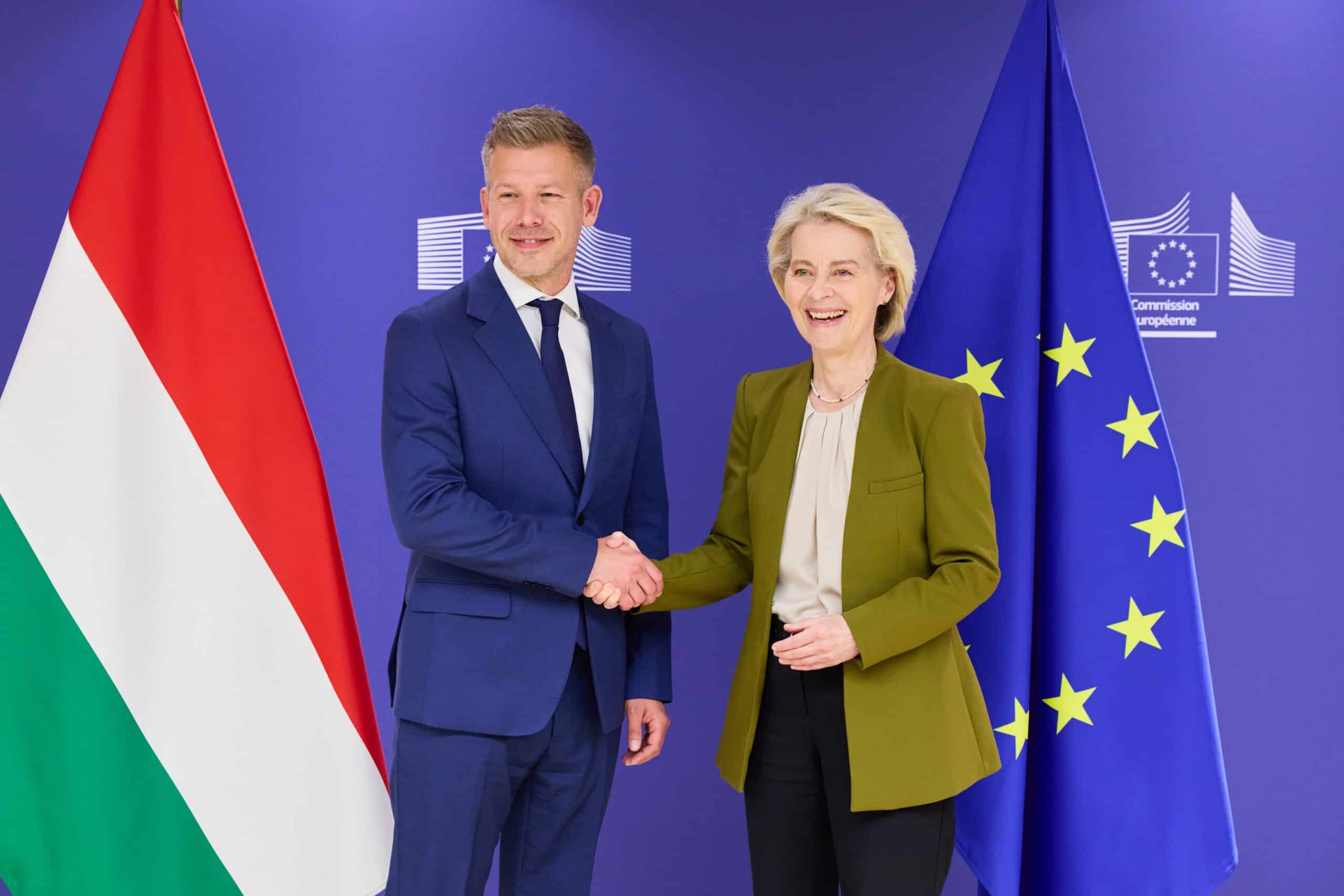
April 29,k 2026.
Photo Credit: Dati Bendo, European Commision
By contrast, Magyar has signaled a reorientation toward cooperative engagement with the European Union and Western institutions, emphasizing the restoration of Hungary’s credibility, access to EU funds, and alignment with core EU-norms. International reactions have interpreted his victory as Hungary “choosing Europe” and marking a shift away from confrontational nationalism toward a more conventional pro-European stance. At the same time, this shift remains bounded: Magyar has indicated continuity on certain issues—such as migration, an uncontested pro-Israel policy, and cautious positioning on Ukraine. Taken together, this suggests not a full turn, but a recalibration from antagonistic antiliberalism to embedded conservatism within the European order.
Conclusion
In the end, Orbán’s fall reads less like a clean rupture than a revealing or unmasking. The system that once appeared immovable—fortified by law, capital, institutional engineering, international soft power, and carefully curated myth—proved contingent, brittle, and ultimately finite. Yet its defeat does not dissolve its logic or the structure of social relations that it spent more than fifteen years engineering. Orbán was never merely a leader or a party; he was the articulator of Orbánism as a way of organizing power, society, and imagination. That architecture remains.
Magyar’s victory, then, is both an opening and a warning. It demonstrates that even entrenched regimes can fracture from within, but also that their replacements may inherit more than they overturn. If the old order’s exclusions, hierarchies, and dependencies persist in subtler, technocratic form, the political transformation risks becoming aesthetic rather than substantive.
For the left, the task is clear but formidable: not simply to celebrate the end of Orbán, but to contest the conditions that made him possible. From a left-wing perspective, the rise and consolidation of Orbán’s rule can be understood as the outcome of structural transformations set in motion during Hungary’s post-1989 transition to capitalism. The rapid implementation of neoliberal reforms—privatization, deindustrialization, and welfare retrenchment—produced widespread social dislocation and insecurity, all while discrediting the postsocialist left. At the same time, the weakening of trade unions and the erosion of working-class political organization generated a representational vacuum, diminishing the capacity for class-based mobilization. This vacuum was compounded by crises of legitimacy, notably the 2006 political scandals and the 2008 financial crisis, which undermined trust in liberal democratic institutions.
In this context, Orbán was able to rearticulate social antagonisms in nationalist and civilizational terms, displacing class conflict with narratives of sovereignty and cultural defense. His project was further stabilized through the construction of a loyal domestic capitalist class and the broader conditions of dependent integration into European markets. Finally, the erosion of left-wing intellectual and cultural infrastructures further constrained the production of counterhegemonic alternatives, enabling the consolidation of an illiberal political order.
In a Magyar-led political configuration, the Hungarian left would face a structurally constrained and strategically ambiguous position. On the one hand, Magyar’s challenge to Orbán’s system opens a limited political space by disrupting the hegemonic unity of the ruling bloc and reactivating elements of political competition. On the other hand, his program, rooted largely in anticorruption discourse and institutional restoration, does not fundamentally contest the underlying socioeconomic order that sustained both Orbánism and its liberal predecessors. As such, without deepening its popular roots and its independence, the left risks being relegated to a subordinate role within a broad anti-Orbán coalition, where its capacity to articulate an autonomous, class-based critique is diluted in favor of procedural and moral appeals centered on the rule of law. History has paused briefly. What follows will determine whether this moment becomes transition, or merely transition management.