
And yet Persia’s unjust fate only persisted in the ensuing decades, as fears of Bolshevik influence after 1917 suffocated Iran’s democratic trajectory yet again. The British deemed Mohammad Ali Shah’s son, Ahmad Shah Qajar, unable to protect their imperial interests against the burgeoning Soviet Union, and in a striking reversal, backed Reza Shah instead in the lesser-known coup of 1921. Ironically, just two years earlier, Ahmad Shah had essentially reaffirmed British financial control of Persia by presiding over the 1919 Anglo-Persian Agreement, which reaffirmed the D’Arcy Concession by granting sweeping oil concessions to the British Anglo-Persian Oil Company (APOC) in exchange for a small 2 million pounds sterling loan, supplies to build a British-trained army, and British advising at cost to the Persian government, among other provisions rendered to a British client state.2The 1901 D’Arcy concession was an oil concession between British financier William Knox D’Arcy, and Mozaffar ad-Din Shah, giving D’Arcy exclusive oil rights. In return, the Shah obtained £20,000 worth of shares and 16 percent of annual net profits. The D’Arcy concession was nullified in 1932, and in 1933 subject to later (failed) renegotiations by Reza Shah. The provisions of the agreement included, for instance, British assistance to revise Persia’s existing customs tariff and assistance in railway construction projects. Unsurprisingly, Reza Shah’s foreign-backed reign culminated in the brutal suppression of trade unions, left-wing parties, and press freedoms. For instance, during the 1920s political transition between Ahmad Shah and Reza Shah, Iran fielded a lively labor movement among oil workers in Khuzestan, who demanded a minimum wage and the replacement of British foreigners by Iranian workers. But Reza Shah’s consolidation of power in the late 1920s and early ’30s accompanied his sensational arrest of “The Fifty-Three” and passage of the “Anti-Communist Law” (Qanun-e Siah), which slaughtered the labor movement. He also broke a prominent labor strike among Abadani oil workers in 1929—a crisis the British thought was so serious they even dispatched a battleship to Abadan. The British thanked and congratulated Reza Shah for dealing with it “so speedily.”
Under the British-backed Reza Shah the majles resumed course, but only after its parliamentary immunity was stripped away via loyalist control of the Senate. This allowed him to not only crack down on labor, but also legislatively suppress the freedom of religious institutions. In a decree famously known as the Kashf-e hijab, Reza Shah forbade the chador (hijab) and required every citizen to wear Western clothes. Ironically, the clerical establishment that had once constrained democratic reform was now itself subject to state repression Religious mojtahedi who had been given the constitutional prerogative to block legislation contrary to Shiite Islam in 1906 were now themselves being forced into imprisonment and exile.
Quite expectedly, while Reza Shah’s son transitioned to the throne in 1941, democratic backsliding and brutal labor crackdowns only deepened. For one, despite Reza Shah’s declaration of neutrality, the British accused Iran of supporting Nazism, citing fears that APOC would fall into German hands. Reza Shah’s subsequent and failed attempts to renegotiate APOC in a way that better protected Iranian interests appeared hostile to British financiers, leading to Reza Shah’s exile, his son’s succession, and the Anglo-Soviet Invasion of 1941. And yet after the British and Soviets withdrew following World War II, the freshly enthroned Mohammad Reza Shah behaved much like his father, openly seeking constitutional amendments to expand his royal authority and bypass parliamentary procedure while packing the Senate with friendly royalists. With his appointment of Mohammad Sa’ed as Prime Minister prior to calling for a vote, Mohammad Reza Shah’s actions reached a tipping point and triggered significant public opposition. Most notably, Mohammad Mossadegh rose to the national scene, organizing Iran’s first political party, the National Front, which coalesced secular liberals and noncommunist socialists around genuine constitutionalism, parliamentary sovereignty, and nationalization of APOC.3Due to negative publicity surrounding Mohammad Mossadegh’s overthrow in 1953, APOC was renamed to “British Petroleum” (BP) in 1954. Mossadegh achieved enormous popularity, which was reaffirmed by the legislative election of 1950. The Shah was now obliged to nominate Mossadegh as Prime Minister.
Under Mossadegh, Iran was prepared to reverse course and potentially achieve the economic and democratic aspirations of the initial Constitutional Revolution. But this burgeoning democratic opening in the National Front rested on an unstable situation whose fault lines were quickly and deliberately magnified by Western intelligence agencies. Disagreements arose between Mossadegh and the allied cleric Sayyed Abol-Ghasem Kashani, whose tolerance of the Islamist terrorist organization Fada-iyan-e Islam contributed to political assassinations and social instability. The CIA deliberately allied with Kashani, whose later public denouncements triggered the mass withdrawal of Mossadegh’s clerical support, ultimately shattering what could have persevered as a democratic coalition.
As is famously known, Mossadegh was overthrown in a 1953 coup d’etat orchestrated by British and US intelligence agencies, ultimately strengthening the rule of Mohammad Reza Shah. This intervention was simply an unabashed iteration of the less well-known imperial management ongoing since the early nineteenth century. But the 1953 coup no less represented a decisive turning point in Iranian political history, insofar as it profoundly hindered secular reformism and left disorganized religious fundamentalism as the surviving oppositional infrastructure. In a kind of repetition compulsion, the Western obstruction of Iranian economic transformation only repeated the central problematic encountered in the early days of the Constitutional Revolution. For just as the economic strikes of 1906 were redirected into a defense of clerical authority because of draconian Western intervention, post-coup Iran exhibited a similar political realignment—material discontent once channeled through the semiloyal National Front was rerouted into a disloyal, antisystem opposition rooted in radical Islamism.
By eliminating secular and socialist opposition, Mohammad Reza Shah’s regime and its foreign backers ultimately determined the shape of the opposition that would eventually overthrow it. After Mossadegh’s overthrow, the National Front and its coalition of subsidiary center-left parties were outlawed and forced to move underground, for decades. What is more, the CIA even assisted the Shah’s security forces in identifying and arresting over a thousand communist party members (the Tudeh), thereby blocking Iran’s only secular antisystem party. What remained was a patently counterfeit two-party system decreed by the Shah. Political participation was confined only to those two officially sanctioned parties already in alignment with royal authority.4Iranians at the time often amusingly referred to both as the “Yes Sir, Party” and “Yes, of course Sir, Party.” Now a fully authoritarian state, Mohammad Reza Shah inadvertently fostered increasing alignment between the formerly semiloyal, democratic opposition and vehemently antisystem fundamentalist groups. Though religious critics of the regime also endured severe repression, their disorganization rendered them better positioned to challenge the regime through informal networks beyond the reach of formal party politics.
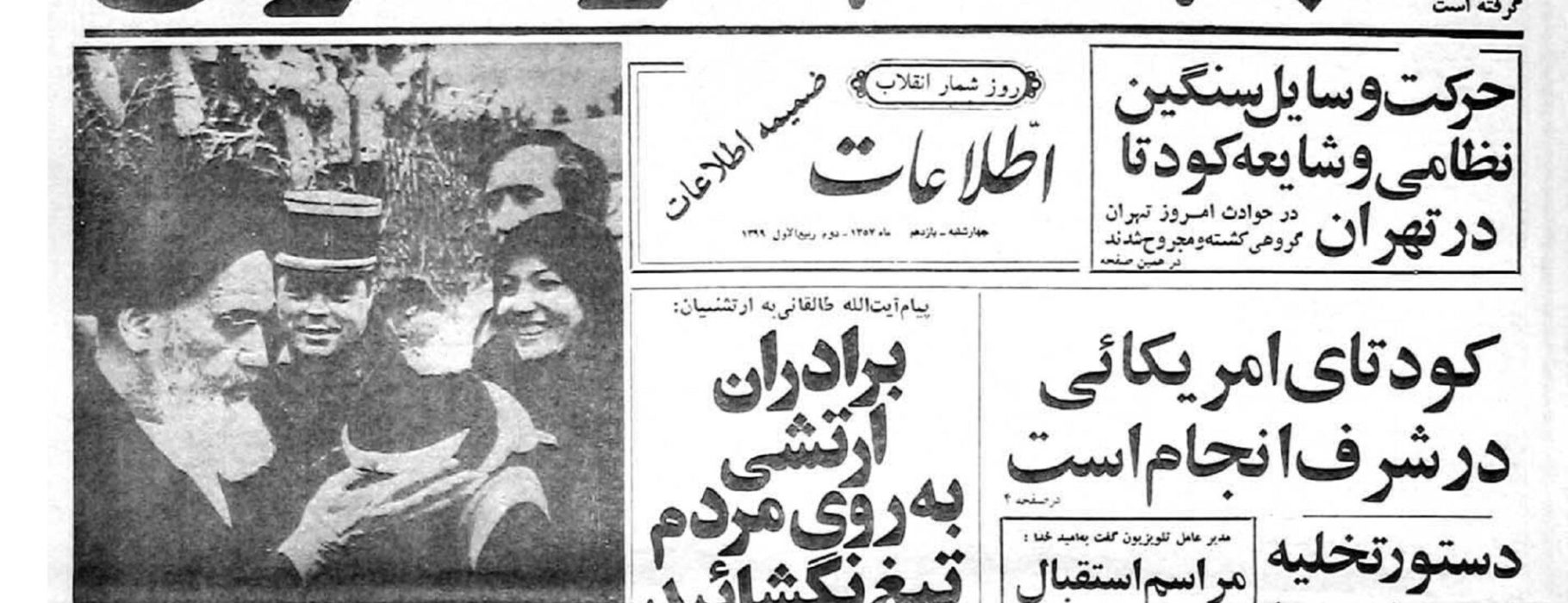
It was only after Abol-Ghasem Kashani’s death in 1962 that previously disassembled religious clerics became organized. Kashani’s death left a leadership vacuum among the clerical base quickly filled by the group’s new dominant figure, Ruhollah Khomeini. Khomeini transformed scattered religious resentment into a unified movement that vocally rejected both monarchy and Western democracy. This organizational achievement was largely accomplished by directly appealing to millions of poor urban migrants and bazaaris—a constituency who maintained strong ties to religious and traditionalist institutions, but whose displacement by the Shah’s land reforms made them particularly sensitive to anti-elite rhetoric. To top it off, the Shah’s dissolution of the majles in 1961 and the launch of his “White Revolution” modernization program only intensified hostility among the more secular activists, who now allied with urban migrants and clerics alike. Once the Shah finally banned all political parties except his own in 1977, he left the secular opposition with little choice but to nearly fully align with religious radicals. The 1979 revolution was a result of this convergence.
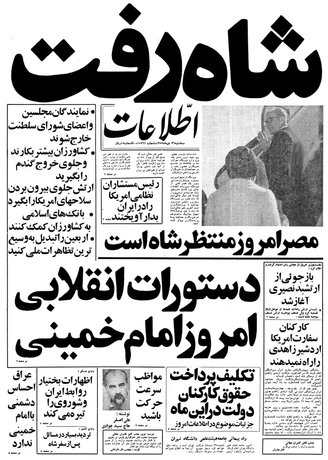
Contemporary Iranian protests inevitably evoke comparisons to 1979, but the lesson is not that its mass movements require charismatic leadership or greater democratic commitment. It is that movements defined solely by opposition and regime change leave the terrain of power open to dangerous antidemocratic parties. As we have seen, the legacy of foreign intervention is not confined to 1953, but rather lies in the repeated weakening of a genuinely democratic and socialist opposition that could be united by a shared progressive vision. In its place emerged a loose coalition of workers, fundamentalists, and student activists united almost exclusively by pure hostility to the monarchy. The post-1979 years were thus characterized by the opportunistic consolidation of political power by the Islamic Republic. Although the Republic had initially appealed to these other nonclerical groups, by 1981 it had banned all political parties except its own and rapidly imprisoned their former allies, socialist and liberal alike.
Without clearly articulated commitments that prioritize economic rectification, disloyal actors who merely employ antielite rhetoric can opportunistically seize authority without being held accountable to the demands which first mobilized their support in the first place. Avoiding the failures of the twentieth century hence requires something more than mere opposition to the regime; it demands a positive socialist program that speaks directly to material hardship without being falsely redirected into a vindication of religiosity or anti-Western sentiment.
Socialist Welfarism: Beyond Monarchy and Theocracy
With the assassination of Khamenei and the now ongoing war, the prospect of a socialist Iran has perhaps never seemed more remote and even raising the possibility can seem out of touch. Yet it is precisely under these conditions that clearly articulating a positive vision becomes critical, if Iran is to have a chance at resisting imperial domination and engendering regime change on its own terms.
As Nazanin Shahrokni aptly noted at the start of the war, there has been an emerging division between protesters who emphasize the brutality of Western imperialist warmongering and those who are fiercely antiregime.5Nazanin Shahrokni, “Who Speaks for Iran?—and from where?” Spectre, March 2, 2026, https://doi.org/10.63478/3O220ECL. Relevantly, the second group tends to pledge loyalty to Reza Pahlavi, the son of the overthrown monarch, who now resides in a suburb of Washington DC. The first draws attention to the history of Western imperialism and aligns itself with the antiwar movement, though can sometimes verge on endorsing the regime (in part because of Iran’s support of Palestine). Both groups tend to neglect that the construction of a positive Iranian vision begins precisely when we can both seriously acknowledge the egregious brutality of the Islamic Republic, while also abandoning regressive monarchical nostalgia.
As is true of many nations around the world, the top 1 percent of Iranians hold about a third of national wealth, with severe inflation rendering essentials completely unaffordable. This is largely because the Shah’s modernization efforts incurred lopsided economic development, enriching wealthy Tehranis over lower classes and the outer provinces. In fact, the laborers and factory workers to whom Khomeinei’s leadership appealed were not only ineligible for the Shah’s new programs, they were forced out of their villages into urban shantytowns precisely because of them. Nevertheless, this inequality has only persisted under the Islamic Republic, whose rentier political economy depends on oil revenues that are then disproportionately redistributed to those who control the oil industry—members of the Islamic Republic themselves.
So while an Iranian socialist vision would not only firmly address severe inequality, it would also aim at the reconstruction of social trust after over a century of both foreign intervention and authoritarian mismanagement. Because these inequities are facilitated by rentierism, activists may have to fight for economic diversification and tax-based revenue systems, institutions which would ultimately take both economic and political power away from ruling elites. In doing so, Iran’s largest and most critical industries (oil, gas, and manufacturing), which have long been subject to clerical control, may democratize through independent unions or worker councils. Independent trade unions are currently illegal in Iran, so focus on organizing and protecting workers in those critical sectors where they have significant leverage may be the most efficacious approach in transitioning away from the Republic’s capitalistic rentierism.
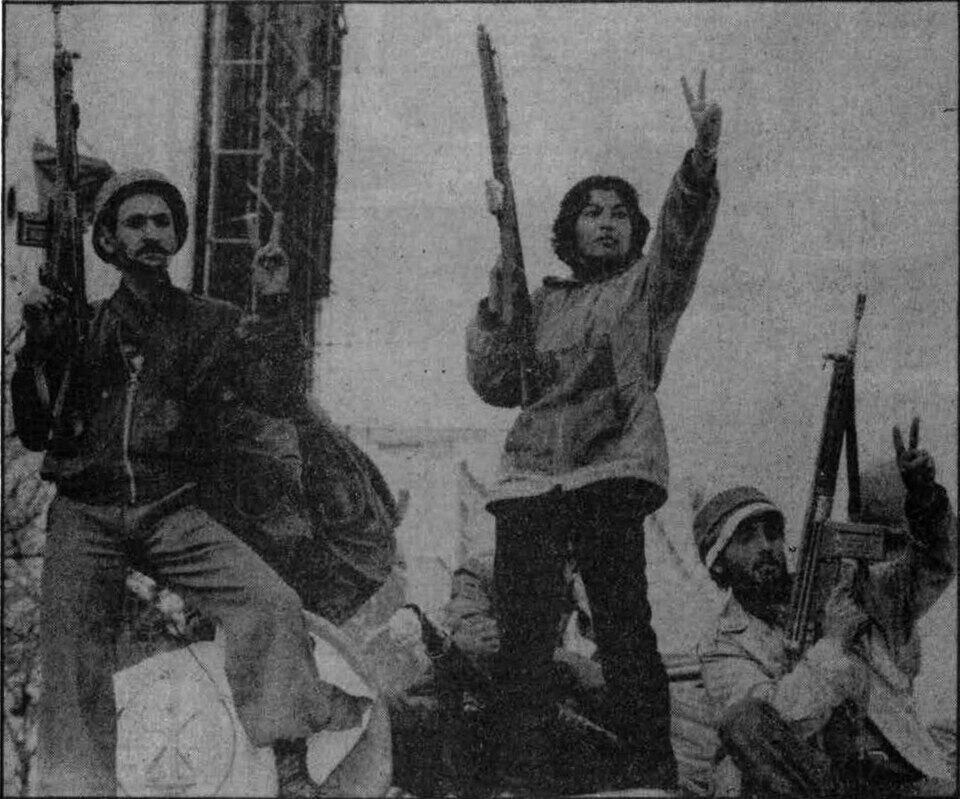
Photo Credit: Medhi Sahabi via Wikimedai Commons
After the present period of military confrontation subsides, any long-term democratic transition will depend on a fundamental restructuring of relations between capital, labor, and the state. To that end, since the Iranian political economy is structured around the alignment of state and capitalist power against a fragmented working class, withholding labor could imply massive strides in attaining democratic transition. Iran’s oil, gas, and manufacturing industries are controlled by a dense network of state-managed institutions which remain insulated from democratic oversight or taxation. The means of production hence remain concentrated among political elites, while social groups and ethnic minorities most affected by economic instability possess the least political power to do anything about it. Strengthening existing, informal, and underground labor organizations in those key oil, gas, and manufacturing sectors is necessary to apply coordinated pressure against the ruling institutions. By withholding labor, workers are also better positioned to transition the national economy out of rentierism, diversifying economic production, and prioritizing material needs.
Finally and crucially, an Iranian socialist future would depend on the refusal of external patronage, most especially Western powers whose interventions have repeatedly proven less concerned with democratization and more with geopolitical leverage. Though Khamenei’s assassination is a desirable outcome in light of his longstanding savagery, the United States and Israel’s ongoing war have corroded the Iranian protest movement by recycling a failed logic that liberation can only be attained from abroad. But if there is to be meaningful, substantive regime change that is imposed not by Washington but by Iranians themselves, what kind of opposition is actually prepared to shape Iran’s future, and who is capable of organizing the alternative?
When labor, material hardship, and economic redistribution are treated as foundational, Iran may yet succeed in building institutions capable of sustaining genuine participatory democracy against foreign suffocation. The historical lessons of nineteenth- and twentieth-century Iran reveal that Western imperialism has conveniently and repeatedly redirected economic grievance away from the left toward fundamentalist and monarchical alternatives. With the assassination of Khamenei and subsequent calls from a nostalgic diaspora to restore the Prince to his rightful throne, we must not repeat the same mistake again. Our institutions and political leadership cannot be manufactured from abroad, nor can we wishfully delude ourselves that just rulers will spontaneously spring from Zahhak’s fallen blood, flashing into existence like a golden Simurgh sensing our desperation.6In one of the greatest works of Persian literature, the Shahnameh, the tale of Zahhak is among the most well-known. A corrupt and impetuous prince, Zahhak’s gratuitousness invites the devil, who disguises himself on various occasions to tempt Zahhak into accomplishing his own aims. When Zahhak agrees to let the devil kiss his shoulders, two vicious serpents spring out from both, kept tame only when fed human brains. The hero Fereydoon, fated to defeat Zahhak, leads the masses in a political revolution to overthrow Zahhak. Advised on the wise counsel of an angel not to kill him, Fereydoon binds Zahhak with a lion’s pelt to the bottom of Mount Damavand, where he remains for eternity.
Throughout the Shahnameh and Sufi poetry, the simurgh frequently appears as a compassionate bird with the head of a dog and the claws of a lion, ready to help when the central protagonists face desperation or impending agony. Rather, our social institutions must emerge from Iranian cultural life itself, animated by the human freedom, dignity, and conviviality that Hafez imagined as the measure of a vibrant and fulfilling life.