
Comparing the Directions in Which Ideas Travel in Ages of Reaction
October 2, 2026
One way of understanding how politics has moved to the right over the past twenty years is through analogies with previous periods in the past. This piece explores the international reactionary advance of which the United States is only a part. Its subject is the relationship between the imperial hegemon and its regional allies and the question of who controls those dynamics. There has been very little discussion on the left of the relationship between the United States and such second-rank allies. Most Marxists seem to assume that the dynamic is a one-way contact between inspiration and emulator, in which ideas and reactionary practices travel, but only from the core outwards. That assumption is not unwise; it is an accurate description of how reactionary ideas spread in the 1920s and 1930s, when Hitler and Mussolini’s refusal to sponsor allies within poorer states was practically self-destructive. However, it is no longer accurate to think that mere regional powers are incapable of shaping the metropolis a century later during this fresh period of right-wing advance. The balance of ideological power between hegemon and regional allies is more equal than in the past, with regional powers much more able to spread their influence outside their borders.
Ages of Reaction – Then and Now
By 1939, fascist (Italy, Germany and arguably Spain) or fascist-adjacent parties (including those of António de Oliveira Salazar in Portugal, and Miklós Horthy in Hungary) ruled almost all of Europe. The few exceptions were governed by the center right. The left had been defeated in states where social democrats had clawed their way to power over many years (as in Britain from 1929) and where Popular Front governments had been formed to resist fascism (as in France and Spain from 1936). Such politics also prospered outside of Europe. In Latin America, far-right regimes held power in Brazil, Argentina, Guatemala, El Salvador, Honduras, and the Dominican Republic. A fetid abundance of right-wing groups held power, including conservatives and reactionaries as well as fascists. As in our decade, the right was in power in most places and the energy was with the right’s more extreme forms. While there were waves of resistance and radicalization within the left alongside the polarization to the right, as in our moment, the overall dynamic bolstered Socialists or Communists less than fascists.
There are obvious differences between the two periods, some of which reduce the opportunities for the worst forms of contemporary authoritarianism. For example, in the 1920s and 1930s, democracy was a relatively recent innovation. Mussolini and Hitler were able to cancel elections altogether with relatively high levels of support. By contrast, today, fair elections have been treated as the best available system for decades. Politicians today are still wary of declaring themselves rulers for life. Additionally, while both periods show signs of generalized social breakdown, the early twentieth century was more conducive to escalating violence. That is, while our world is emerging from a recent crisis of illness (COVID-19), the generalized social breakdown in Europe from 1914 to 1918 produced hunger, disease, and war. The right-wing radicalization of the 1920s took place directly after a world war, when hundreds of thousands of people held on to their guns and militias flourished. In Germany between 1919 and 1922, supporters of the far right killed such high-profile politicians as Rosa Luxemburg, Karl Liebknecht, Kurt Eisner (the socialist Prime Minister of Bavaria), Hugo Haase (a leader of the Independent Social Democratic Party), Matthias Erzberger (the former German Finance Minister), and Walter Rathenau (the serving German Foreign Minister). Judges and other people in positions of influence minimized the significance of these killings. While far-right supporters killed more than three hundred people over those three years, the judiciary punished the perpetrators with an average sentence of just four months in prison. The public was already accustomed to political violence when Hitler’s Stormtroopers spread out from their base in Bavaria in the early 1930s. Those outrages felt like the continuation of habits that had been part of German politics for years. Today, by contrast, such killings as those of Renée Good, Alex Pretti, and Johan Sebastián Guerrero still seem shocking and new.
In the interwar years, ideas spread from the richest countries to the poorest. Reactionary states weren’t looking to spawn emulators abroad and Italian and German fascists did not mean to copy reactionary advances elsewhere in the world. They weren’t willing to learn anything even from their erstwhile allies.
Other differences make today more fertile than the interwar years for authoritarians. In the interwar period, such reactionary rulers as Salazar or Józef Piłsudski in Poland contented themselves with conservative foreign policies. Quasifascist Portugal maintained a diplomatic alliance with democratic England that went back decades and authoritarian Poland signed nonaggression pacts with both Stalin and Hitler. At that time, reactionary regimes kept existing relationships alive. These international relationships were a force for continuity in interwar Europe. By contrast, today’s reactionaries seek to make use of Trump as a force for change. In the 1930s, Germany was not the best-armed state in the world, and the Italian army was smaller than that of the United States, the USSR, Poland, or France. Today, the United States, a major exporter of far- right ideology, possesses an army out of proportion to any rival and has repeatedly used force to achieve diplomatic outcomes under both liberal and conservative leaders. Today, there is no stigma against military intervention. When the United States starts wars under Trump, both Democratic and Republican lawmakers back them.
Further still, global warming puts tremendous pressure on state capacity and the relationship between classes, compelling the renegotiation of social relationships. The far-right parties are acting preemptively to the climate crisis to make sure that the costs of adaptation are not paid by the rich. The accelerating speed of ecological change raises the possibility of a general social collapse to which significant parts of the right have responded with sadistic glee. Having a world led by right-wing and far-right states slows the chances of climate adaptation, increases the number of climate disasters, makes food and other natural goods more expensive, and intensifies the mood of general disorder and crisis on which further radicalization thrives.
The 1930s: Policing the Unilateral Transmission of Ideas
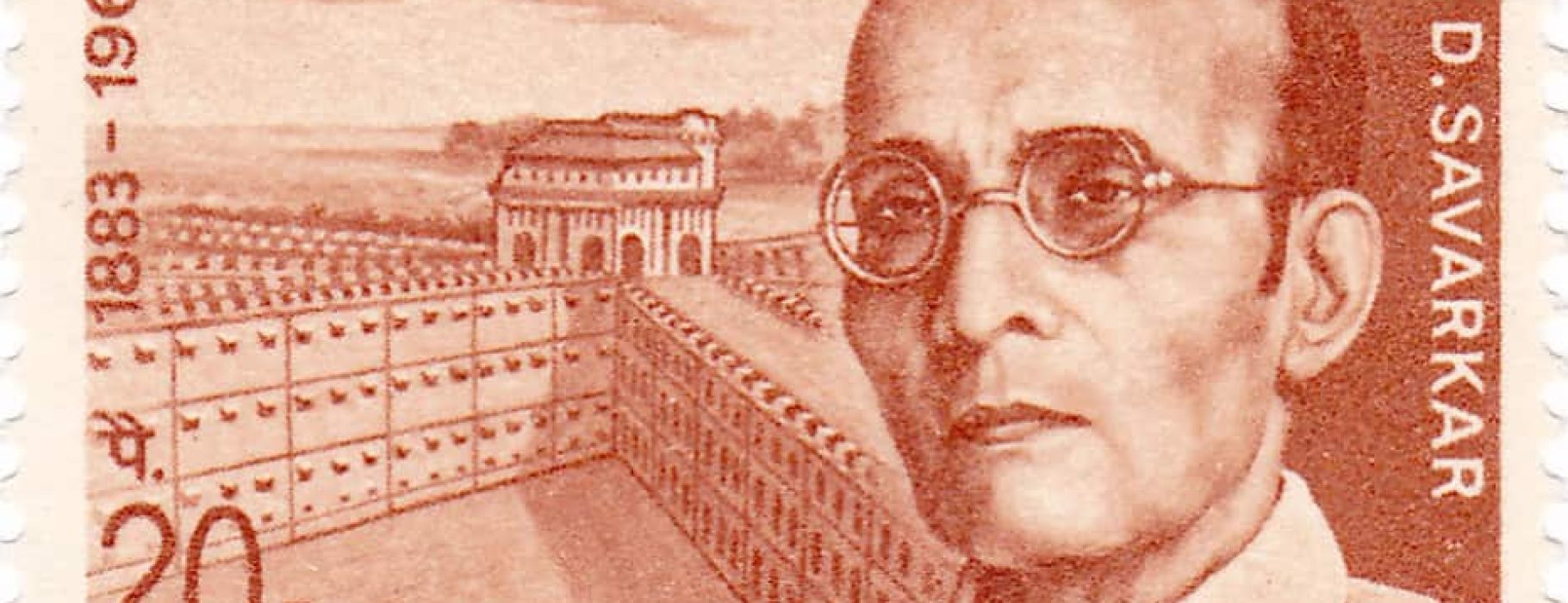
In the interwar years, ideas spread from the richest countries to the poorest. Reactionary states weren’t looking to spawn emulators abroad and Italian and German fascists did not mean to copy reactionary advances elsewhere in the world. They weren’t willing to learn anything even from their erstwhile allies. The best-known example of this relationship is the emulation of fascism by a group of Indian intellectuals, including B. S. Moonje and Vinayak Damodar Savarkar, who admired Mussolini’s use of uniforms and Hitler’s antisemitism.1Christophe Jaffrelot, Modi’s India (Princeton University Press, 2021). Several generations of the Indian left blame the subsequent emergence of such forces as the Hindutva paramilitary Rashtriya Swayamsevak Sangh and the Hindu nationalist Bharatiya Janata Party on this first generation of Indian fascists. What matters more, to this analysis, is how little reciprocal interest the Europeans showed in their “allies.” In the 1920s and ’30s, fascists gave little support to their fellow travelers. “I, as a man of Germanic blood,” wrote Hitler in Mein Kampf, “would, in spite of everything, rather see India under English rule than any other.” In 1941, Indian nationalist Subhas Chandra Bose, was willing to wage war on the English. He approached the Germans, but their relationship was transactional. The Nazis refused to support Bose’s plans to declare independence. The Nazis did not see their Indian allies as equals and could not conceive of the periphery as anything other than the rightful object of domination by colonizing states. They understood that their imitators would have their own plans and visions for India, and Mussolini and Hitler were unwilling to permit that authority to anyone, even to people who promised their undying loyalty to them.
There are other examples of intellectuals from colonized states approaching the fascist rulers in the 1930s and seeking an alliance with them. These courtiers could see that Germany and Italy had an interest in disturbing the present balance of power. They would offer their services to the fascist states as authors, publicists, or even the leaders of nationalist armies and express their deep interest in such ideas as antisemitism or one-party dictatorships. All they would ask from the fascists in return was patronage in their struggle against the Western empires. And yet, such supplicants were repeatedly disappointed. One such discontented fascist was Shakib Arslan, a Druze emir from Lebanon and advocate of a Greater Syria free from European domination. Such plans could only succeed if England was defeated and, by the early 1930s, Arslan was in Geneva to negotiate with Mussolini. Arslan met Mussolini several times, offered to carry out propaganda for the fascists, and, at the end of the decade, offered to translate Mein Kampf for Hitler. But Arslan couldn’t get any balancing commitment to ease his task of making fascism acceptable in the Muslim world—he sought in vain to tone down Italy’s use of mass killings forced displacements, death marches, and use of chemical weapons in Libya. Arslan called that war a “heinous act”, and a “stain in world history,” which would “never fade from the memory of the 400 million Muslims.”2Gilbert Achcar, The Arabs and the Holocaust (Saqi Books, 2010), 119–20.
Another example is Stepan Bandera, and the Organization of Ukrainian Nationalists (OUN). In 1934, Bandera was sentenced to life imprisonment for a plot to assassinate the Polish minister of internal affairs, Bronisław Pieracki. He was released after the German invasion of Poland. Within the OUN, the Nazi salute was compulsory. Their paper celebrated Germany’s military victories. As they took control of Ukrainian territory OUN volunteers hung German and Ukrainian flags. The party’s members were eager participants in the mass killing of Ukrainian Jews. And yet, all this abasement did Bandera little good. The OUN expected their alliance with German fascism to deliver Ukrainian independence; the Nazis considered Ukraine a mere source of lebensraum for German settlers. In June 1941, when supporters of the OUN in German-captured Lviv declared an independent Ukraine, the Nazis responded by arresting Bandera. His brothers were sent to Auschwitz. He spent the next three years in fascist jails.3John-Paul Hinka, Ukrainian Nationalists and the Holocaust (Ibidem Verlag, 2021), 226–27.
One way of thinking about some of [our current era's] dynamics would be to describe what’s happening as the activities of a reactionary international, as united as the old left-wing internationals of the 1920s.
Under interwar fascism, ideas travelled from richer countries to poorer ones. Fascism had little interest in encouraging any return path through which their allies might shape the German or Italian movement. Leaders such as Mussolini and Hitler were committed to such a deeply racist view of the world that they struggled to see any non-Europeans or Slavs as their long-term allies. They couldn’t even agree to divide the world up among nationalists, for that would imply a limit to Italy and Germany’s borders; Mussolini and Hitler intended to rule everywhere. They distrusted even people who prostrated themselves in their commitment to far-right ideological positions. They hated the idea of sharing control within their parties or of tolerating regional imitators who might then generate their own plans. The fascists weren’t interested in anyone else’s ideas, even those intended to flatter them.
The 2020s and Transmission in Many Directions
In recent years, there have been occasions when right-led states other than the United States have influenced decision-makers outside their own borders. Not all reactionary practices have spread from the center—often the emulation has been within the periphery. Here are some examples. A managed Presidential election in Egypt in May 2014 saw the head of the armed forces Abdel Fattah el-Sisi winning 96.91 percent of the vote. Sisi developed a successful rhetorical device for dissipating allegations of authoritarianism. Widespread practices of torture and forced disappearances were necessary, he and his supporters argued, because his opponents (who included liberals and socialists, as well as supporters of forms of Islamic politics) were all “terrorists.” Sisi legislated state immunity for officials engaged in “anti-terrorist” activity and encouraged states across the region to follow his example. Jordan, Qatar, Saudi Arabia, and Tunisia all introduced so-called antiterror laws in 2014 or 2015.4Maria Josua, “What Drives Diffusion? Anti-Terrorism Legislation in the Arab Middle East and North Africa,” Journal of Global Security Studies 6, no. 3 (2021): 1–38, https://doi.org/10.1093/jogss/ogaa049.
Since 2014, India’s Prime Minister Narendra Modi has said that his country would act as a world guide (Vishwaguru) for the right-wing’s ascent in the global South. In Nepal, after earthquakes destroyed over half a million homes in 2015, the Parliament introduced a moderate secular constitution that displeased the BJP since it removed previous wording that had made Hinduism the national religion. India blockaded fuel from entering the country; food, medicines, and vaccines also became scarce. At the end of the year, the United Nations estimated that 3 million Nepali children under five were at risk of disease or death.5Sanjoy Majumder, “Why India Is Concerned About Nepal’s Constitution,” BBC, September 22, 2015, www.bbc.com/news/world-asia-india-34313280; Tej Karki, “Political Blackmailing: A Case Study of India’s Unofficial Blockade on Nepal,” preprint, submitted September 7, 2022, , https://dx.doi.org/10.2139/ssrn.4197326; “Over 3 million Under-Fives at Risk of Death or Disease: UN,” Kathmandu Post, December 1, 2015, https://kathmandupost.com/miscellaneous/2015/12/01/over-3-million-under-fives-at-risk-of-death-or-disease-un. In Bangladesh, Modi was the main international sponsor of local dictator Sheikh Hasina. Her regime was criticized for such moves as a Digital Security Act that facilitated a crackdown that jailed ten thousand oppositionists in 2023. Before a popular insurrection toppled her in summer 2024, Indian capital became a monopoly presence in Bangladesh and Modi intervened with election monitors to prevent proper scrutiny of Hasina’s election. After the 2024 uprising, Modi has used border pushbacks against Bangladeshi migrants to discipline the new government.6Hannah Ellis-Petersen and Shaikh Azizur Rahman, “Full Prisons and False Charges: Bangladesh Opposition Faces Pre-election Crackdown,” Guardian, November 9, 2023, www.theguardian.com/world/2023/nov/10/bangladesh-opposition-crackdown-election-sheikh-hasina-awami-league-bnp; Hannah Ellis-Petersen, “‘A Myopic Policy’: India’s Backing of Ousted Bangladesh Leader Sheikh Hasina Leaves it in a Bind,” Guardian, September 2, 2024, www.theguardian.com/world/article/2024/sep/03/a-myopic-policy-indias-backing-of-ousted-bangladesh-leader-sheikh-hasina-leaves-it-in-a-bind; Elaine Wik, “Managing Contradictions at the Border Outsourcing Coercion Between Bangladesh and India,” Spectre, April 7, 2026, https://doi.org/10.63478/JLZVDDD9.
In Russia, Vladimir Putin lent money to the French Rassemblement National in 2017 when that party was in crisis. The same regime funds events where far-right social influencers, including the likes of Candace Owen and Andrew Tate, meet and share ideas.7Gabriel Gatehouse, “Marine Le Pen: Who’s Funding France’s Far Right?,” BBC, April 3, 2017, www.bbc.com/news/world-europe-39478066; Ivan Nechepurenko, “Russia Rails Against the West but Welcomes Candace Owens and Andrew Tate,” New York Times, June 5, 2026, www.nytimes.com/2026/06/05/world/europe/russia-st-petersburg-forum-candace-owens.html.
European Commission initiated an Article 7 procedure against Hungary, accusing the regime of antisemitism. Netanyahu visited Hungary in the same year, the first Israeli leader to do so in three decades. He termed Orbán a “true friend of Israel.” European states, not least Germany, had long deferred to Israel as the world expert in antisemitism and Israel’s support succeeded in collapsing attempts to stop their lurch into authoritarianism. Prior to the 2026 elections, which Orbán went on to lose, Netanyahu produced a video endorsing him, telling Hungarian voters that “Viktor Orbán means safety, security, stability.”8“We Shall Not Let Soros Have the Last Laugh,” Cabinet Office of the Prime Minister, June 28, 2017, https://2015-2022.miniszterelnok.hu/we-shall-not-let-soros-have-the-last-laugh; Mariann Őry, “Viktor Orbán Is a True Friend of Israel,” Hungary Today, May 5, 2023, https://hungarytoday.hu/viktor-orban-is-a-true-friend-of-israel.
Hungary, meanwhile, has itself been a patron to far-right thinkers outside its borders, hosting a magazine intended to spread news of “the political success and intellectual renaissance of Hungarian conservatism”—the Hungarian Conservative—and funding right-wing writers and influencers including the Spiked network; Netanyahu’s son Yair; and the former academic and unsuccessful election candidate for Britain’s far-right Reform party, Matt Goodwin.9Karam Bales, “EXPOSED: How Viktor Orbán Bankrolled the Network Around Reform UK,” Byline Times, April 14, 2026, https://bylinetimes.com/2026/04/14/exposed-how-viktor-orban-bankrolled-the-network-around-reform-uk; Or Kashti and Danel Lushi, “Orban’s PR Hothouse Recruits Right-wing Israeli Influencers – Including Yair Netanyahu,” Haaretz, January 25, 2023, www.haaretz.com/israel-news/2023-01-25/ty-article/.premium/orbans-pr-hothouse-recruits-right-wing-israeli-influencers-including-yair-netanyahu/00000185-e590-d0d6-a9ef-fdd9b2eb0000; Alice McCool, “Orbán’s Pay Cheques: Reform Candidate Fuelled by Profits from Russian Oil,” Good Law Project, February 16, 2026, https://goodlawproject.org/orbans-pay-checks-reform-candidate-fuelled-by-profits-from-russian-oil; Tal Shalev, “Orbán’s Defeat Is Also a Blow to His Ally Netanyahu,” CNN, April 14, 2026, https://edition.cnn.com/2026/04/14/europe/orbans-defeat-netanyahu-ally-intl.
Argentinean President Javier Milei has overseen drastic cuts since his election, including reducing public sector salaries by nearly 40 percent, ending public works programs, and cutting investment in science and technology by 95 percent. He gave his approval to developments in the United States at the Conservative Political Action Conference in February 2025, when he joined Elon Musk on stage and gifted him with a chainsaw to mow down bureaucracy.10Tiago Rogero and Facundo Iglesia, “Javier Milei Embroiled in Corruption Scandal Tying His Sister to Alleged Bribes,” Guardian, August 27, 2025, www.theguardian.com/world/2025/aug/27/javier-milei-sister-argentina-alleged-kickbacks; Clara Preve and Isabel Debre, “Milei’s Top Aide and Cabinet Chief Resigns Over Spiraling Corruption Scandal,” AP News, June 27, 2026, https://apnews.com/article/argentina-javier-milei-corruption-scandal-manuel-adorni-fa01b7cae195568d70cc64e1762fe3c7; Rachel Looker, “Elon Musk and Javier Milei Wield Chainsaw on Stage at Conservative Conference,” BBC, February 20, 2025, https://www.bbc.com/news/live/c0q1z88gvv7t. Milei has shared platforms with like-minded politicians across Latin America. He was a main speaker at a Conservative Political Action Conference in Paraguay in 2025. He endorsed right-wing candidate José Antonio Kast, who won elections in Chile in spring 2026. He travelled to São Paulo this July to give his support to Senator Flávio Bolsonaro before Brazil’s elections in October. Flávio is the son of former President Jair Bolsonaro, who was sentenced to twenty-seven years in prison for attempting to stage a coup after losing the 2022 elections.
The above examples are intended to be illustrative rather than exhaustive. They describe not a single action, but a constantly repeated dynamic under which the United States’s client states seek to build alliances and spread their own circles of influence outside their borders.
Since the setbacks to US power in Iraq and Afghanistan and the global banking crisis of 2007 and 2008, US imperial policy has been less about that state acting as “firefighter in chief”…The United States has acted through regional allies to a much greater extent in recent years. Having been granted a position of favor, these allies have then used their authority to serve their own interests and not solely their patron’s.
Not every country has an equal ability to shape other countries for the worse. Of all the states I’ve mentioned, Israel has the ability to do the most harm. Its actions have directly contradicted the principle that that there was no greater crime than genocide: the cornerstone of global politics after 1945. The country has persuaded its allies (including the United States, Britain, Germany, and others) to answer even milquetoast declarations of solidarity with the suffering Palestinians with criminal punishments and has contributed to an authoritarian turn in European politics. It is no coincidence that Trump’s war with Iran began in alliance with Israel.
The United States expects to benefit from the relatively loose grip with which it keeps its regional allies in check. After the US military strike this year on Venezuela and the capture of Venezuelan President Nicolás Maduro, Argentina and Paraguay announced their support for the attack, as did Israel, and Orbán’s Hungary.
Even though there aren’t many signs of fracture yet, it is quite possible that we might see divisions emerging over time within this group of right-wing states. Within the United States, the Republican camp is already split on Trump’s alliance with Israel. Other potential sources of division include Milei’s support for cutting and for neoliberal-type economics. At some point you would expect this to run against main currents of MAGA-type politics which prioritize (at least in theory) nationalism, popular buy-in to economic models, and reindustrialization: there aren’t many Hayek-fans in Trump’s inner core.
One way of thinking about some of these dynamics would be to describe what’s happening as the activities of a reactionary international, as united as the old left-wing internationals of the 1920s. In the interwar period, Mussolini repeatedly threatened to launch a fascist international to counter his worldwide Communist opponent. There were many similar gatherings in the 1950s and ’60s, when the far right was far more invested in a single fascist model than it is today. One difference between today’s activities and those postwar predecessors is that this time heads of state can be counted among the speakers at the top table.
The willingness of regional powers to seek to influence the global hegemon makes this period different from past moments of reactionary advance. The global shift rightward began before Trump was elected and does not depend solely on him. Even before he was elected, people outside the United States saw him as an ally and sought to assist him.
A final point I want to make is that the above model assumes a certain willingness on the part of US decision-makers to allow regional powers to emerge inside and perhaps even against US sponsorship. In quite a few of the above examples, what I have been describing is the exercise of regional power—“freelancing,” one might say—in the interest of the United States but without its instigation. The broader context is a certain subtle change in the way that global rivalry has permitted regional powers to emerge. The big context is the US rivalry with China and the dominant role that the latter country plays in heavy industry, renewables, and rare earth elements. China is within the US trade zone, just as it is outside the pool of that country’s political and military allies. Between 2001 and 2003, a particular model of neo conservative politics dominated US foreign policy. Since the setbacks to US power in Iraq and Afghanistan and the global banking crisis of 2007 and 2008, US imperial policy has been less about that state acting as “firefighter in chief,” as Leo Panitch and Sam Gindin described the United States in their book The Making of Global Capitalism.11Sam Gindin and Leo Panitch, The Making of Global Capitalism: The Political Economy of American Empire (Verso, 2013). That was an accurate metaphor once, but no longer fits. The United States has acted through regional allies to a much greater extent in recent years. Having been granted a position of favor, these allies have then used their authority to serve their own interests and not solely their patron’s.
Trump has continued this pattern, being even more overt than his predecessors in distinguishing “model” allies who should be “empower[ed]” to “promote our shared interests.” He has not wanted to push back the subimperialist to a position of subservience, nor would it be easy when states have a potential alternative patron. He wants regional allies to support him, meaning not just US power but his regime and the interests of his family. He believes that friends of the United States should bear the cost of its friendship—for example, that Europe should pay for the Ukraine war and that Venezuela should send oil to compensate the United States for dominating it.
The point is not that the United States has given up on ruling the world militarily, but rather that it divides the world into two sets of nations: friends (relatively developed countries who are told to police the states around them) and enemies (everyone else). US rulers have largely given up on insisting that their allies should conform to any social or political system. The allies move into that space of relative freedom, formulating new ideas and new myths of their own choosing. It hasn’t happened yet, but these alliances will tatter. At some point in the near future, their leading figures will turn on each other.