
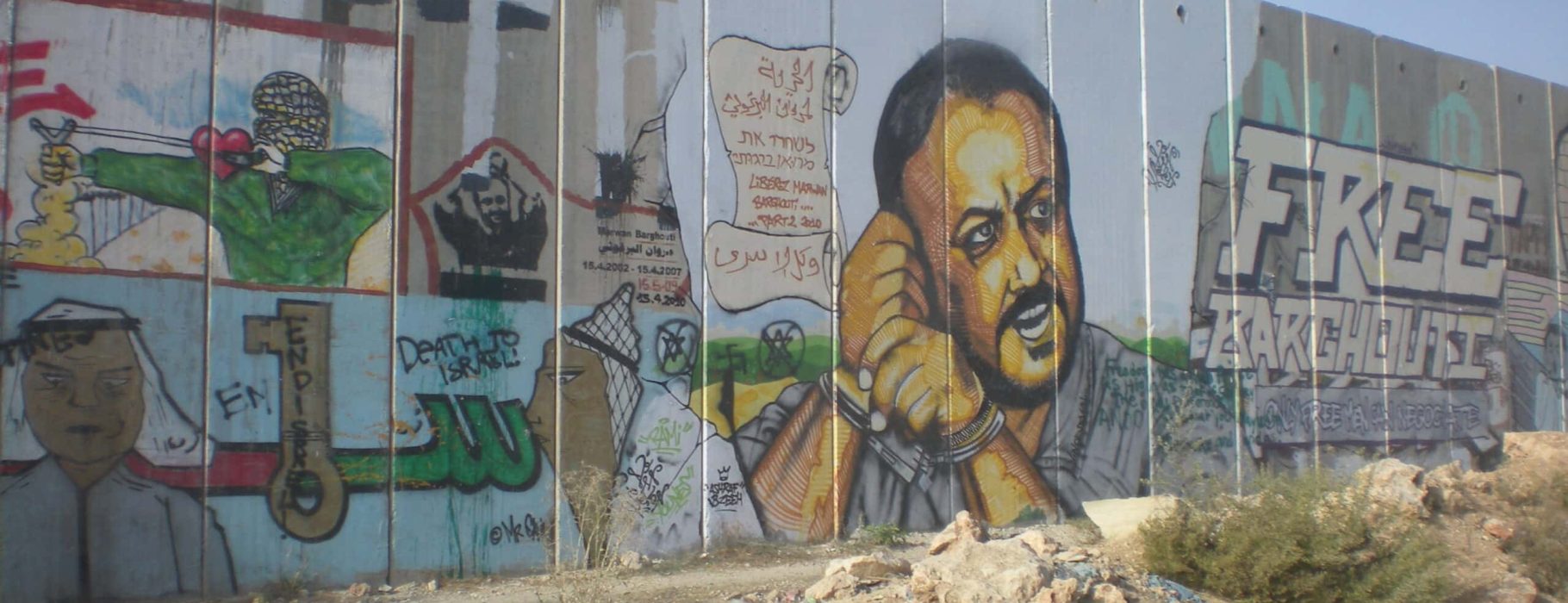
Exporting Genocide

An Interview with Basil Farraj on Israel’s Carceral Logics

January 20, 2026

doi.org/10.63478/MT3EE7ZE

Note: This piece includes a graphic description of sexual violence.

It’s been over two years now for us in the global pro-Palestine movement—for some of us, well over half a century—and we’re exhausted. We’ve been fighting on the streets, on campuses, in legislatures, at dinner tables, in jail… Still, every hour, the numbers refresh, the media tote up new data on what’s happening to Palestinians: how many dead, how many starving, freezing, sick, tortured. So, even with our (many) faults, our movement continues, despite a cynically engineered “ceasefire” and Donald Trump’s execrable peace plan.1“Read Trump’s 20-Point Proposal to End the War in Gaza,” PBS News, September 29, 2025, pbs.org/newshour/politics/read-trumps-20-point-proposal-to-end-the-war-in-gaza. Now that the media reports of genocide have quieted a bit, we’re hearing more about Israel’s prisons.

“Prisons as a Frontline of Genocide” reads the October 7, 2025, report from Addameer, a Palestinian prisoner support organization in Ramallah.2“Prisons as a Frontline of Genocide: Two Years of War Crimes Against Palestinian Political Detainees,” Addameer, October 7, 2025, addameer.ps/news/5618. It’s one voice among a growing number describing Israeli prisons as torture camps. With an estimated 70 percent of Palestinian families having had at least one member in Israeli custody, prison has come to exemplify what is being done to Palestine.

There are news media reports of Israel’s “iron coffins,” where Palestinian prisoners are held for days inside small cages, unable to speak or move; “disco rooms” blasting music during savage interrogations; sexual violence.3“35 Days in the Iron Coffin: Freed Gaza Prisoner Reveals the Horror of Sde Teiman,” Palestine Information Center, November 8, 2025, english.palinfo.com/Zionist-Terrorism/2025/11/08/351270; Post by Drop Site (@DropSiteNews), X, November 17, 2025, 7:15 p.m., x.com/dropsitenews/status/1990574463922901100. News of guards gang-raping a Palestinian man last year at the Sde Teiman detention camp has found its way into the mainstream.4Simon Speakman Cordall, “Israel’s Focus on Political Drama, Rather than Palestinian Rape Victim,” Al Jazeera, November 5, 2025, aljazeera.com/news/2025/11/5/israels-focus-on-political-drama-rather-than-palestinian-rape-victim. Recently, Ibrahim Salem, a Palestinian who described Sde Teiman guards breaking a chair over his chest and applying electricity to his genitals, was lucky enough to be released alive this August. He told the Middle East Eye:

You stand on one leg for two hours, then they would tell you: “Do you want me to help you?” And when you say yes, they tell you to say, “I am the son of a whore, I am the brother of a whore”…5David Hearst, “For Any Hope of Peace, All Palestinians Must Be Released from Israel’s Torture Chambers,” Middle East Eye, December 4, 2025, middleeasteye.net/opinion/any-hope-peace-all-palestinians-must-be-released-israels-torture-chambers.

In the same article was an account from another former prisoner:

We were stripped completely. Soldiers brought dogs that climbed on us and urinated on me. Then one of the dogs raped me—the dog did it deliberately, knowing exactly what it was doing, and inserted its penis into my anus, while the soldiers kept beating and torturing us and spraying pepper spray in our faces…6Hearst, “For Any Hope of Peace.”

I wasn’t sure if I should include that last example; I’m still worried it seems like prison porn. But a couple of good friends—prison abolition activists—said, “No. We have an obligation to see the truth.”

Seeing it, we cannot look away.

But, as we look on, most of us don’t stop to consider how Israel can actually make its treatment of Palestinians legal. After all, says duly elected prime minister Benjamin Netanyahu, “We are a Nation of Laws.”7“‘We Are a Nation of Laws’: Benjamin Netanyahu,” ANI, June 21, 2023, aninews.in/news/world/middle-east/we-are-a-nation-of-laws-benjamin-netanyahu20230621224918.

Hannah Arendt’s Eichmann in Jerusalem analyzes the trial of Adolf Eichmann, chief architect of the Nazi Holocaust. Although the book was fiercely controversial when it came out, it deserves to be remembered now far beyond its timeworn subtitle, “the banality of evil.” Whether or not Eichmann was doing his job “banally,” it’s the legal structures embedded in jobs like his that need attention. One of Arendt’s efforts to clarify her work was her essay “Personal Responsibility Under Dictatorship,” in which she writes:

The moral point of the matter is never reached by calling what happened by the name of “genocide” or by counting the many millions of victims.… It is reached only when we realize this happened within the frame of a legal order and that the cornerstone of this “new law” consisted of the command “Thou shall kill,” not thy enemy but innocent people.8Hannah Arendt, “Personal Responsibility Under a Dictatorship,” in Thinking and Judging, ed. Jerome Kohn (New York: Schocken Books, 2003), available at grattoncourses.wordpress.com/wp-content/uploads/2016/08/responsibility-under-a-dictatorship-arendt.pdf.

Basil Farraj: “Political Prisoners Form Our Consciousness”
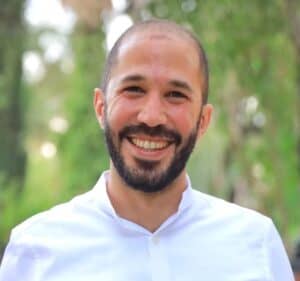
Basil Farraj

Basil Farraj is a professor at the Department of Philosophy and Cultural Studies at Birzeit University in the West Bank. He is currently working on a research project on the global circulation of carceral practices—specifically, Israel’s role in structuring a legal genocide based largely on carceral policy. During the course of Basil’s growing up, his father, Abdul Razeq Farraj, was arrested many times; he is now in prison, where he has remained since his last arrest in 2019. But, since October 7, 2023, when Israel shut down communication between Palestinian prisoners and the outside world, there’s been virtually no word from him.9Basil Farraj, “My Father Is One of Thousands Disappeared in Israel’s Prisons,” Inkstick Media, November 13, 2025, inkstickmedia.com/my-father-is-one-of-thousands-disappeared-in-israels-prisons. This is true for thousands of families with loved ones in Israeli detention.

“My family’s experience is not unique,” Farraj tells me from Jerusalem in a Zoom conversation. “Prison leaves a trace on every Palestinian, so that the cause of political prisoners has formed our national consciousness, our identity, not only because of the high incarceration rate, but also because many Palestinian prisoners are political leaders, unionists, students, academics. The violence and torture inside prison resemble Israeli colonial tactics of control outside the Israeli prison itself.”

Farraj talks about his project, which is to trace how Israel has become “the epitome of carceral logic, so that, through violence, through legalizing torture practices, even its use of walls and the fragmentation of the West Bank—because this carceral logic extends beyond prison—Israel is a pioneer.”

What follows is an interview with Farraj about some of the elements inherent in Israel’s “carceral logics.” It’s my attempt—doomed to be inadequate and incomplete—not to look away.

Palestinian = Threat

The first thing to consider, says Farraj, is that, in the eyes of the state of Israel—military, intelligence agencies, Security Cabinet, the Israeli Prison Service, as well as most of the Israeli population—Palestinians are a security threat. Once incarcerated, they become “security prisoners.”

…in the eyes of the state of Israel—military, intelligence agencies, Security Cabinet, the Israeli Prison Service, as well as most of the Israeli population—Palestinians are a security threat…

Basil Farraj: Any Palestinian is a subject who warrants arrest as a threat to public security or to public order. It’s a racial system that justifies all forms of violence. What Israel has created is this category of security prisoner, which is actually codified in law and legal practice. This distinguishes between Palestinian and Jewish prisoners, who are almost always classified as criminal when they’re sent to prison.

A Jewish person might be prosecuted, convicted, but as a prisoner is entitled to rights like furlough, visitation, conjugal visits. The war [on Gaza] has not affected them in any way. But the state does not grant Palestinians rights. Of course, there might be some Palestinians who are perhaps classified [by the Israeli penal code] as criminal. But Palestinians are still treated as security prisoners. So if you’re in the West Bank and you’re arrested, you would be subject to military law, military orders.

Two Legal Systems

susie day: In the United States, when people are sent to prison, they’re considered criminals, whether they’ve been convicted under civil or criminal law. How does military law work?

BF: Israel has created two legal systems. One in Palestine and one in areas like [air quotes] “Israel” and Jerusalem, which Palestinians refer to as “1948.” The first, in the Occupied Territories, is the military court system, where the Palestinian population in the West Bank and the Gaza Strip are subject to military laws and orders. The second system is Israeli civilian law, which is supposedly used to deal with Israeli settlers. It is these two sets of laws that are the basis for designating Palestinians as a threat to Israeli society.

The military system is built on the premise that Palestinians will be detained in front of judges who are military officials, as are the court transcribers, the prosecutors, the translators. In a sense, it’s the entire military industry that prosecutes Palestinians. And, in this Israeli military system, there’s a conviction rate of almost 99.9 percent.

Now, if you’re a Palestinian from 1948, that’s a different characterization. There are numerous categories that Israel has created, not only to detain Palestinians, but also to detain Arabs and other nationalities. In the eyes of the Israeli state, they all pose a threat.

sd: How have Palestinian prisoners reacted to this?

BF: There’s a long history of resistance inside Israeli prisons. Palestinians demanded authorities grant them visitation rights and books, and some sort of communication with the outside world. Historically, they went on numerous hunger strikes, in addition to other forms of resistance, to demand these rights. But over the past two-plus years, Israel unleashed a war. Obviously, there was a war unfolding in the Gaza Strip, but it was also in Israeli prisons, where the authorities rid prisoners of all of the rights they earned through decades of struggle.

Prisoners have no communication with the outside world, and the Israeli authorities engage in systematic starvation campaigns, continuously denying medical care. People are intentionally murdered inside Israeli prisons because of Israeli carceral policies. So, yes, we could say that what’s happening now is unparalleled. We’re talking about the deaths of at least one hundred Palestinian prisoners over the past two years. Most of those prisoners’ bodies are kept by the Israeli authorities; they refuse to hand them over to their families for burial.

Violent Documents

sd: After you become a security prisoner, where can it go from there?

BF: Understand that this is not simply locking up someone. There’s another face of Israel, the layers of carceral processes, the architecture of the military courts and orders to enable forms of violence and torture and the taming of Palestinian prisoners. We can begin, for instance, with a vast set of laws and over one thousand military orders that Israel has put in place since 1967.10“Israeli Military Orders in the Occupied Palestinian Territory,” Applied Research Institute—Jerusalem, accessed January 10, 2026, orders.arij.org. These laws allow early morning raids of Palestinian homes, the arrest of children.11“Palestinian Officials Confirm Israel Imprisoned over 600 Children in 2025,” The Cradle, January 9, 2026, thecradle.co/articles/palestinian-officials-confirm-israel-imprisoned-over-600-children-in-2025. They detail interrogation practices, which can be brutal. They detail what form of punishment Palestinians should receive.

For example, military order 1651.12Israel Ministry of Defense, Order Regarding Security Directives [Consolidated Version](Judea and Samaria) (No. 1651), 2009 (Tel Aviv: Ministry of Defense, 2009), available at militarycourtwatch.org/files/server/military_order_1651.pdf. It’s bureaucratic, of course, and a very violent document, but it’s interesting. One of its segments says that a Palestinian who throws a stone at a military vehicle will be sentenced for up to ten years. It details how many days, how many months, a Palestinian should stay [in prison] or be interrogated without seeing a lawyer.

If you’re subject to military law, you can be arrested under the policy of administrative detention, which dates back to the early British colonial mandate.13“Administrative Detention,” B’tselem, accessed January 10, 2026, btselem.org/administrative_detention. If you’re administratively detained, they don’t have to tell you what your charges are; you can be denied legal counsel, held for indefinite periods of time. What I’m trying to say is that the law is used not to mitigate harm, but to enable violence, to enable torture.14The policy of designating “unlawful combatants” also permits someone charged with armed resistance—for example, membership in Hamas or the Palestinian Islamic Jihad—to be administratively detained without protection under the Geneva Conventions.

For instance, the 1999 Israeli High Court ruling allows the Israeli regime, in cases that the Israeli intelligence agency would describe as a “ticking bomb” scenario, to torture Palestinians outright.15Public Committee Against Torture v. Israel, HCJ 5100/94, High Court Ruling, September 6, 1999, available at btselem.org/sites/default/files2/hc5100_94_19990906_torture_ruling_eng.pdf. Very similar logic to CIA tactics, it’s a way of legalizing violence when the officer believes that there’s an imminent threat that must be resolved.

There are codes not only to detain Palestinians, but to allow for their continuous monitoring and surveillance. This logic of surveillance is not simply inside the prisons. Israel wants Palestinians to think and feel that they’re continuously being surveilled. Israel exports this surveillance because it prides itself on its surveillance security industry inside a homeland state.

sd: Isn’t there a Knesset bill that would legalize the execution of Palestinians, but not Jewish settlers?

BF: It passed its first reading.16“Israel Parliament Passes First Reading of Death Penalty for ‘Terrorism’ Law,” Al Jazeera, November 11, 2025, aljazeera.com/news/2025/11/11/israeli-parliament-nods-to-bill-to-introduce-death-penalty-for. So, it’s important to look at the broader logic; you can only understand it through these sets of laws. The idea of a law effectively directed against Palestinians is a racial law, right? [Since this interview, there are news reports of Israeli ministers sporting little noose pins resembling yellow lapel ribbons in support of the bill.]17Sharon Zhang, “Israeli Ministers Wear Noose Pins to Symbolize Support for Killing Palestinians,” Truthout, December 8, 2025, truthout.org/articles/israeli-ministers-wear-noose-pins-to-symbolize-support-for-killing-palestinians.

These laws, these legal codes, this Israeli technology, also allow for Palestinian displacement, for settlers to live on Palestinian stolen land. They have allowed a genocide to unfold for over two years. This is a carceral logic that penalizes any form of dissent and political mobilization in or out of prison. This is what I’m arguing—this logic has become mobile.

“US Carceral Logic Does Not Fit Here”

sd: How do we in the United States understand this? Here, in this system, there are laws that punish a person for alleged crimes. But, at least in theory, there’s also the prospect of “rehabilitation.” Is there anything like that for a Palestinian?

BF: The short answer is no; US carceral logic does not fit here. Parole is not granted to Palestinians. I’m sure, in the United States, there are cases where the prison system does not grant parole, but in the Israeli state, it’s across the board. Also, Israel hands down life sentences—many Palestinians have been in prison for over thirty-five years.

There have been Palestinian prisoners who have petitioned for release after passing two-thirds of a prison term, but in all these cases, Israel has denied any possibility of parole. The logic is always that these prisoners cannot be rehabilitated because they’re threats, inside and outside prison. Israel also does not have institutions to rehabilitate Palestinian prisoners because they were not arrested for a crime; they were arrested for resisting military law. That’s a very different kind of logic.

There are political prisoners whom Israel tries to deeply depoliticize, although Israel never recognizes them as political prisoners. Many prisoners, even before the war, were killed inside Israeli prisons for many reasons—Israel denied them medical care, for instance—and these prisoners actually petitioned for early release. There were campaigns outside the prison for release [notably, Walid Daqqah’s recent campaign], but Israel continuously denied them.18Dalia Taha and Waliq Daqqah, “‘We Call it a Policy of Slow Killing’: Why so Many Called for the Release of Waliq Daqqah,” In These Times, October 12, 2023, inthesetimes.com/article/palestinian-political-prisoner-walid-daqqah.

And why would Israel starve its Palestinian prison population? To break them, physically, psychologically, emotionally. I mean, not granting people the right to communicate with their families for over two years, not allowing them to leave their prison cells for long periods of time, that tells us the location of human rights in this Zionist regime. This regime wants to imprison Palestinians and recreate them as depoliticized subjects, removed not just of any will to resist, but of any desire to live.

And why would Israel starve its Palestinian prison population? To break them, physically, psychologically, emotionally. I mean, not granting people the right to communicate with their families for over two years, not allowing them to leave their prison cells for long periods of time, that tells us the location of human rights in this Zionist regime. This regime wants to imprison Palestinians and recreate them as depoliticized subjects, removed not just of any will to resist, but of any desire to live.

sd: What about “recidivism”? What are the chances of a Palestinian released from prison going back?

BF: In order to answer that question, you have to highlight the fact that Palestinian prisoners are not criminals. Going back to prison would not mean you’ve done something wrong; it would mean you’re living under a colonial regime that views you, your entire history, your actual existence as a threat. But, to answer your question, yes, people do go back to prison. It’s a cycle where, if the Israeli authorities punish you in any way, you will certainly be punished again.

After release, prisoners do live with a fear of being re-arrested. They know that the structures that allowed for their arrest have not changed. The only way to break that cycle is by dismantling this Zionist regime.

sd: You’ve written that, in the months after the war on Gaza started, Israeli citizens were able to go home, turn on their televisions, and see on the news what was being done to Palestinians in prison.

BF:When the war began, the Israeli channels broadcasted images from inside Israeli prisons that showed the degradation of Palestinian prisoners. That did really happen on news shows. Israeli journalists are not neutral, of course. They’re not so much journalists as soldiers; they enter prisons armed, parading prisoners. Israel’s current minister of security, Ben Gvir, humiliated prisoners [including political leader Marwan Barghouti] on live television.19Diana Magnay, “Israel Releases Video Showing Public Humiliation of Prominent Palestinian Prisoner,” Sky News, August 15, 2025, news.sky.com/story/israel-releases-video-showing-public-humiliation-of-prominent-palestinian-prisoner-13412121. That’s part of the same logic. These videos show the true nature of Israeli society, and how much further it’s moved to the right. [See, for example, footage from February 18, 2024, “Prison Tour,” on Israel’s Channel 13; footage from August 6, 2024 of Sde Teiman on Israel’s Channel 12; footage from December 4, 2024, “A Close Look Inside Israel’s Harshest Prison, Meggido,” part one of a three-part documentary.]20“Israel Channel 13 Prison Tour 18.2.2024,” YouTube video, 10:49, posted by Jonathan Ofir, March 1, 2024, youtube.com/watch?v=jvlIPxxS8Pg; Guy Peleg, “Exposure: This Is How the Suspects in the Yemeni Field Affair Were Documents,” Mako, August 6, 2024, mako.co.il/news-law/2024_q3/Article-967f4d28f782191027.htm; “A Close Look Inside Israel’s Harshest Prison | Megiddo | Part One | @DocoCentral,” YouTube video 51:43, posted by Documentary Central, December 4, 2024, youtube.com/watch?v=9cgy28yrAhM.

sd: Here, on US television, cop shows are popular. Shows like NCIS, Law and Order, Criminal Minds dramatize the hideous crimes committed by criminal fiends and what should happen to these monsters—they’re more entertainment than news. Is there anything like that in Israel?

BF: No, it’s not at all like that. Prisoners are shown on television to issue a warning to the broader Palestinian public, to intimidate, to dehumanize Palestinians during an unfolding genocide that already dehumanizes Palestinians and allows for the killing of well over seventy thousand. The reality is that the Zionist regime is murdering people on a continuous basis.

sd: You’ve also written about how important prisoner exchanges have been. With Trump’s twenty-point “peace” plan and the so-called ceasefire, will it be possible to get more prisoners out?

BF: It’s not possible now, unfortunately. Obviously, Israel did not stop its violence and the prisons are still full of Palestinians. There were three phases of prison exchanges—but Israel immediately arrested more Palestinians afterward. Now, we’re talking about at least 9,600 Palestinian prisoners, and the number continues to rise.

Abolishing the Nation of Laws

sd: If Palestinians are finally released, what resources exist for them to heal, to be safe?

BF: There are a number of Palestinian organizations that work with prisoners. There’s the Commission for Detainees and Ex-Detainees Affairs.21“Homepage,” Commission of Detainee and Ex-Detainee Affairs, accessed January 10, 2026, https://cda.gov.ps/index.php/en/. It publishes news about prisons and it’s a good way of keeping up with what takes place. There’s Addameer.22“Homepage,” Addameer, accessed January 10, 2026, https://addameer.ps/. But also the families are essential—the fact that our identity has been constructed and revolves, in a way, around imprisonment, provides that sense of support to prisoners.

sd: What kinds of support would you like to see from us here? Is there, for instance, a way to contact specific prisoners?

BF: In the past, that was possible. Now it’s not because of the total blackout in which prisoners have been placed. But personally, I think one of the best ways people not living in Palestine can support prisoners is to advocate for campaigns that call for the boycott and divestment of Israel in numerous industries—specifically, in industries complicit in the prison system.23“Homepage,” BDS, accessed January 10, 2026, https://bdsmovement.net/.

sd: Kaleem Hawa, a Palestinian scholar and activist, said to me recently, “Every aspect of Israeli society is complicit in this genocide and should be investigated.” Assuming there will eventually be some sort of accountability, what would you want to see?

BF: Accountability—since 1948 and the beginning of the Israeli prison system—does not exist. Israel grants immunity to perpetrators of violence and torture. That being said, what I would like to see, of course, is the end of this carceral regime. But accountability comes with addressing the logics that allow for this detention. You cannot imagine abolition or the end of carcerality without removing what allowed it to exist in the first place.

Accountability—since 1948 and the beginning of the Israeli prison system—does not exist. Israel grants immunity to perpetrators of violence and torture. That being said, what I would like to see, of course, is the end of this carceral regime. But accountability comes with addressing the logics that allow for this detention. You cannot imagine abolition or the end of carcerality without removing what allowed it to exist in the first place.

sd: What do you think about US prisoners—political or not—as well as abolitionists, connecting somehow with the Palestinian prisoner movement?

BF: There’s a necessity to do that work, because Israeli technologies travel worldwide. So fighting for Palestinian prisoners also means fighting for the liberation of those who are oppressed in the United States and other parts of the world. Because these forms of violence are not, unfortunately, only used by Israel.

Over the past two years, Israel has turned its prison system into a war-making machine where people are killed on a daily basis, and it’s creating these logics that propagate and circulate across the globe. This has exposed the true face, for those who didn’t already know it, of the Israeli regime—a brutal, violent system that attacks every sort of rights.

* * *

Talking to Basil Farraj about the logic embedded in Israel’s carceral system, it becomes fairly clear to us here in the United States that the abolition of the US carceral system would have to mean the abolition of our own settler-colonial logic. But, given the accelerated efforts of ICE and Trump’s fixation on targeting immigrants as “threats,” this logic has moved into warp speed. Meanwhile, Israel, the Nation of Laws, continues its legal genocide—and we keep working to free Palestine.

—susie day

SHARE

HELLO, COMRADE

While logged in, you may access all print issues.

If you’d like to log out, click here:

NEED TO UPDATE YOUR DETAILS?

Support our Work

Gift Subscriptions, Renewals, and More